
Cannabis Edibles Packaging Guide: Child Resistance, Barriers, Labels & Formats
Learn how to evaluate cannabis edibles packaging by child resistance, barrier performance, food-contact suitability, serving format, labe...


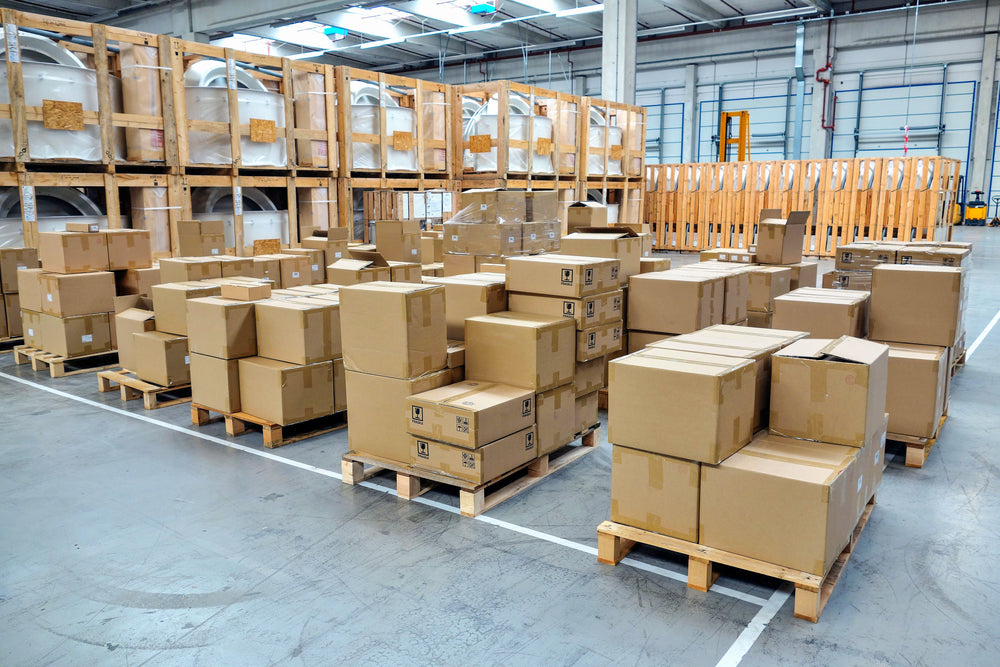
Use sales forecasts, SKU counts, case quantities, custom-production minimums, lead times, freight, and safety stock to plan cannabis packaging orders.
A low minimum order quantity can reduce the amount of cash and storage space committed to cannabis packaging. It does not automatically make an order efficient.
The right quantity depends on the product, package configuration, number of designs, sales forecast, production schedule, storage capacity, replenishment time, freight, and likelihood that the artwork or product will change.
Instead of treating the MOQ as an isolated number, plan the complete order.
MOQ means minimum order quantity. It is the smallest quantity a supplier or production partner will accept for a particular product, packaging format, customization method, or design.
An MOQ may apply to:
The minimum can be driven by setup, tooling, printing, material procurement, production efficiency, case packing, freight, or other operational requirements.
Several related terms are important:
| Term | What it means |
|---|---|
| Case quantity | The number of units packed in one standard case |
| Pallet quantity | The number of units or cases configured on one pallet |
| MOQ | The smallest quantity that can be ordered or produced |
| Per-design minimum | The minimum quantity required for each artwork version or SKU |
| Price break | A quantity threshold that qualifies for a different unit price |
| Production overage | Additional units produced to account for normal manufacturing or application variation |
| Lead time | The period required to complete production after the applicable starting conditions are met |
| Inventory coverage | The amount of time the available packaging should support expected production or sales |
These quantities are related but not interchangeable.
A product might be sold in 500-unit cases while a custom process requires several thousand units. An order may meet the total production minimum but still fail to meet the minimum for each design.
Confirm the exact order unit, total minimum, and per-design requirement before finalizing a purchase order.
Do not calculate quantities until the package has been defined.
Identify:
Each component may have a different case quantity, MOQ, lead time, and production location.
For example, a jar may be stocked by the case while its closure is packed in a different quantity. Labels may have one production minimum, tamper bands another, and a paperboard display a third.
The complete order must include sufficient compatible units of each required component.
Stock and custom orders are planned differently.
Blank, in-stock packaging is generally ordered by the case, pallet, roll, or individual unit, depending on the product.
Blank, in-stock packaging generally ships the next business day. Current inventory, case quantities, quantity breaks, and freight requirements must still be confirmed before ordering.
Stock packaging can be useful when a brand needs:
Label minimums depend on the package, label dimensions, material, finish, printing method, application requirements, and production partner.
Some product specifications list a 5,000-unit minimum for label application, but there is no universal minimum for every project. Application quantities may also need to be ordered in complete packaging case quantities.
Confirm:
Direct-print minimums depend on the package, material, shape, printing process, artwork, number of printed areas, and production partner.
A total order may need to be divided among several designs. Confirm whether the minimum applies to the complete run or to each design.
In-mold labeling and custom package colors generally require larger production runs than traditional labels.
These methods can provide a highly integrated appearance, but the quantity, tooling, production schedule, and inventory commitment should fit a stable product with repeatable demand.
Custom flexible pouches, paperboard packaging, displays, inserts, and printed tamper-evident components use product-specific production methods and minimums.
Confirm the minimum for every combination of:
Changing one of these variables may create a separate production run.
Explore Customization Services to compare available methods.
Begin with the projected number of finished products for each SKU during the intended inventory-coverage period.
A basic planning formula is:
Base packaging requirement = projected finished units × packages required per finished unit
Then account for:
The appropriate allowances depend on the product and production process. Do not apply one standard percentage to every project.
After calculating the requirement, round it to the applicable full case, roll, pallet, MOQ, or per-design minimum.
A total sales forecast is not enough when several designs are involved.
Break the forecast down by:
Suppose a project meets a 10,000-unit total production minimum but uses five designs. The production method may require a minimum quantity per design, or it may allow a specific SKU split.
Before ordering, ask:
A packaging method that works for one high-volume SKU may not be economical for a product line with many lower-volume variations.
Decide how long the order should support expected production.
Common considerations include:
A new product may justify a shorter coverage period and a more flexible packaging method. An established product with predictable demand may support a larger order and a longer coverage period.
Review actual usage regularly. Forecasts should be updated as sales, production, and inventory conditions change.
The reorder point is the inventory level at which the next packaging order should be placed.
A practical formula is:
Reorder point = expected packaging use during replenishment time + safety stock
Replenishment time should include more than manufacturing.
Depending on the project, it may include:
Many customization projects require approximately three to four weeks of production after final proof approval. Artwork preparation, proof revisions, production scheduling, and shipping occur outside that production window.
When possible, begin at least six weeks before the target delivery date. Longer timelines may be necessary for custom colors, specialty materials, large production runs, overseas manufacturing, press proofs, or complex freight arrangements.
Confirm the current schedule before committing to a product launch or filling date.
The lowest unit price does not always produce the lowest operational cost.
Evaluate:
A larger order may reduce unit pricing or per-unit freight costs. It can also commit more cash, occupy more storage space, and increase exposure to product, artwork, regulatory, or branding changes.
A smaller order may reduce those risks while increasing the unit cost.
Compare the landed and operational cost, not only the quoted package price.
A lower MOQ may be especially useful for:
A larger production run may make more sense when:
The goal is not always the lowest possible MOQ. The goal is an order quantity that fits the project without creating unnecessary inventory or operational risk.
A good reorder process begins with the first approved production run.
Retain:
For a reorder, reconfirm the package, materials, artwork, copy, quantity, and production specifications. Do not assume that an older file, component, price, or lead time remains unchanged.
Recurring programs may also support project-specific options such as:
These options depend on the product, quantity, storage requirements, payment terms, and current agreement.
A complete request helps the supplier confirm the correct MOQ and production plan.
Provide:
If the package has not been selected, begin with the product type, formulation, fill weight, dimensions, desired headspace, market, production process, quantity, budget, and timing.
A cannabis packaging MOQ should be evaluated as part of the complete inventory and production plan.
Define the packaging configuration. Forecast demand by SKU. Account for case quantities, production minimums, per-design requirements, lead time, freight, storage, and safety stock. Then compare the cost and risk of ordering more or less packaging.
Explore All Cannabis Packaging Products or contact the Sana Packaging team to discuss product selection, samples, case quantities, customization minimums, inventory planning, and production timing.
Last reviewed: August 27, 2026.
Product availability, case quantities, minimum order quantities, pricing, customization options, production capacity, and lead times can change. Confirm current information for the exact product, component, customization method, quantity, and number of designs before ordering.
Related resources: Printing & Labeling FAQ.

Learn how to evaluate cannabis edibles packaging by child resistance, barrier performance, food-contact suitability, serving format, labe...
Our expert team can take care of it. Just click Get Expert Install and we'll send you an email when it's ready!
If everything looks okay to you, you can Ignore this warning.


