
Why We Don’t Endorse Biodegradable Petroleum-Based Cannabis Packaging
Biodegradable cannabis packaging is not a single material category ora universal dispos...
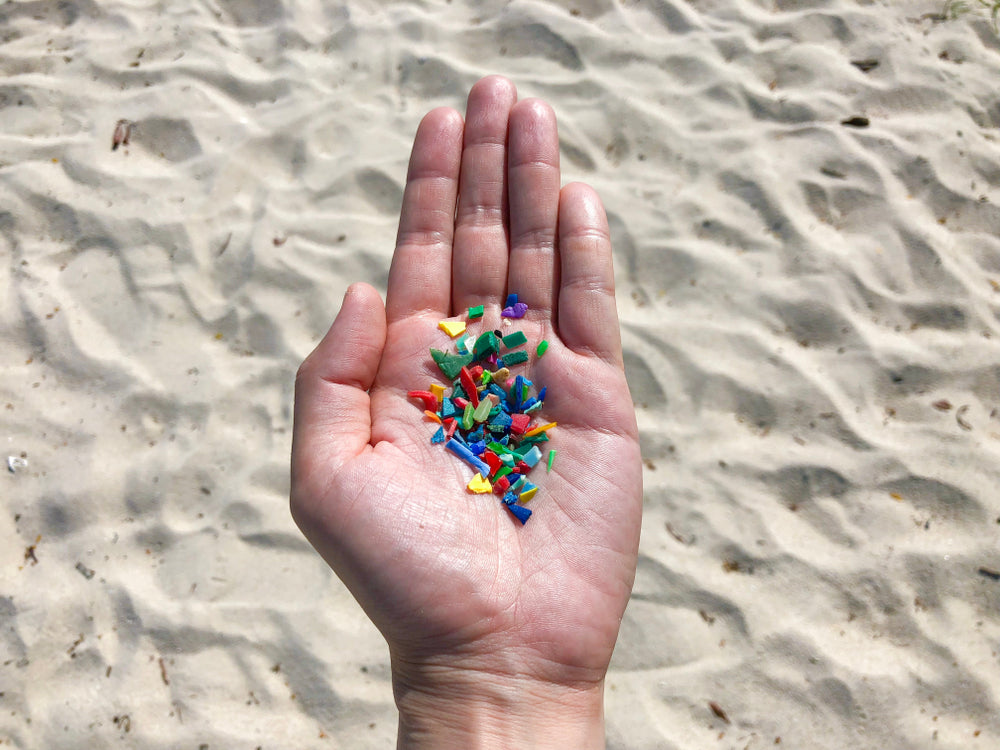
Biodegradable cannabis packaging is not a single material category or a universal disposal instruction.
A biodegradability claim describes how an exact product or component performs under specified environmental conditions. It does not automatically mean that the item is plant-based, compostable, recyclable, safe to litter, accepted by a local recovery program, or environmentally preferable to another package.
Sana Packaging’s position is unequivocal: we do not endorse petroleum-based plastics marketed as “oxo-degradable” or “biodegradable in landfills.”
We consider this positioning a serious form of greenwashing when it presents additive-driven fragmentation or landfill disposal as a responsible solution to packaging waste without establishing complete breakdown under customary disposal conditions or a functioning recovery pathway for the finished package.
Before making or relying on a biodegradable, degradable, or compostable claim, identify the exact packaging configuration, the environment in which it is expected to break down, the rate and extent of degradation, the supporting test or certification, and the disposal pathway available to the intended customer.
This guide addresses claims associated with empty cannabis packaging. Cannabis products, regulated plant waste, oils, solvents, batteries, electronics, and remaining residue may be subject to separate handling requirements.
Start With the Exact Product and Claim
Cannabis packaging commonly contains multiple components, including:
- A primary container
- A lid, cap, or child-resistant closure
- A liner, gasket, or seal
- A label and adhesive
- A tamper-evident component
- An insert or divider
- An outer paperboard box
- Inks, coatings, laminations, or other customization
These components may use different materials and perform differently under disposal conditions.
Evidence for a film, resin, additive, or unprinted prototype should not automatically be extended to a finished package containing labels, adhesives, closures, barriers, inks, or other components.
Before approving a claim, document:
- The exact product, SKU, size, and revision
- Every component included in the finished configuration
- The component or complete package covered by the claim
- The intended disposal environment
- The expected rate and extent of degradation
- The test method, laboratory, or certification supporting the claim
- Whether printing, labeling, or other customization changes the tested configuration
- The markets in which the claim will appear
- The collection or processing systems available in those markets
- The date the evidence was last confirmed
A claim about one component should identify that component unless the evidence supports the complete packaging system.
Keep Biobased, Biodegradable, and Compostable Separate
Several environmental terms are frequently combined even though they describe different attributes.
Biobased or Plant-Based
Biobased describes the source of some or all of a material’s carbon or feedstock.
A biobased plastic may or may not be biodegradable, compostable, or recyclable. A petroleum-based material may also be engineered to biodegrade under particular controlled conditions.
Feedstock and end-of-life performance should be documented separately.
Biodegradable or Degradable
Biodegradable generally refers to the ability of microorganisms to break down a material under specific conditions.
A useful claim needs more information than the word “biodegradable.” The environment, timeframe, extent of breakdown, test conditions, and customary disposal pathway all matter.
Breaking into smaller pieces is not the same as completely breaking down and returning to elements found in nature.
Compostable
Compostability is a more specific end-of-life claim. It addresses whether an item can safely become part of usable compost within an appropriate timeframe under defined composting conditions.
Commercial compostability and home compostability are different claims. Evidence supporting performance in a controlled industrial facility does not establish performance in a backyard compost pile.
Oxo-Degradable, Oxo-Biodegradable, and Photodegradable
These terms describe degradation initiated or accelerated by factors such as oxidation or light.
The claim still needs to identify what happens to the complete item, under which conditions, at what rate, and to what extent. Fragmentation alone should not be represented as complete biodegradation.
Recyclable and Recycled Content
Recyclability, recycled content, biodegradability, and compostability are separate attributes.
A package can contain recycled material without being recyclable. A compostable plastic should not be placed in conventional plastic recycling merely because it resembles another plastic.
For a broader terminology framework, see Cannabis Packaging Sustainability Terms Explained.
Sana Packaging’s Position on Oxo-Degradable and Landfill-Biodegradable Plastics
Sana Packaging does not endorse conventional petroleum-based plastics marketed as “oxo-degradable,” “oxo-biodegradable,” or “biodegradable in landfills.”
These products are commonly conventional petroleum-based plastics combined with additives intended to initiate or accelerate oxidation, fragmentation, or another degradation process under certain conditions.
Adding such an ingredient does not automatically establish that the complete package will safely and completely return to nature after customary disposal. It also does not create a collection, recycling, composting, or material-recovery system.
We reject this packaging position for several reasons:
- Fragmentation is not the same as complete biodegradation
- Loss of strength or molecular weight does not establish complete return to nature
- Testing under controlled conditions may not represent actual landfill conditions
- A result for a resin or additive does not necessarily apply to the complete package
- A landfill is a disposal destination, not a circular recovery pathway
- An additive-based degradability claim does not establish recyclability or compostability
- The claim can make conventional single-use plastic appear to solve a waste problem when the underlying packaging and disposal systems have not changed
Marketing a conventional petroleum-based package as “biodegradable in landfills” can imply that disposal in a landfill produces a meaningful environmental benefit. That implication requires evidence for the complete package, the represented landfill environment, the timeframe, the extent of degradation, the resulting materials, and the actual environmental benefit being communicated.
Sana Packaging will not recommend or present petroleum-based packaging marketed as oxo-degradable or landfill-biodegradable as a responsible cannabis packaging solution.
This position does not require us to claim that every petroleum-derived polymer is chemically incapable of biodegradation under all engineered conditions. It means that Sana Packaging rejects these marketing categories as solutions to packaging waste and will not treat additive-driven degradability or landfill disposal as substitutes for source reduction, reuse, verified recycling, certified composting, or other functioning recovery systems.
Apply the FTC Standards to the Complete Claim
The Federal Trade Commission’s Green Guides explain how the agency evaluates environmental marketing claims.
Under the FTC’s compostable-claims guidance, a marketer should have competent and reliable scientific evidence that all materials in the item will safely become part of usable compost in approximately the same timeframe as the materials with which it is composted.
The claim should be clearly qualified when:
- The item is not suitable for home composting
- The claim could mislead customers about what happens in a landfill
- Appropriate municipal or institutional facilities are not available to a substantial majority of the people or communities where the item is sold
The FTC’s degradable-claims guidance applies to degradable, biodegradable, oxo-degradable, oxo-biodegradable, and photodegradable claims.
An unqualified claim should be supported by evidence that the entire item will completely break down and return to nature within a reasonably short period after customary disposal. For an item entering the solid-waste stream, the FTC states that an unqualified claim is deceptive if complete decomposition does not occur within one year after customary disposal.
The guidance also explains that unqualified claims for items customarily sent to landfills, incinerators, or recycling facilities are deceptive because those environments do not provide conditions for complete decomposition within one year.
Qualifications should clearly address both:
- The environment in which the item can degrade
- The rate and extent of degradation
A qualification should appear clearly with the claim. Important limitations should not be hidden on a separate page, in a technical document, or within a general website disclaimer.
Match the Evidence to the Disposal Environment
Biodegradation depends on environmental conditions. Testing in one environment does not establish performance in another.
Potential environments include:
- Commercial or industrial composting
- Home composting
- Soil
- Freshwater
- Marine environments
- Wastewater treatment
- Anaerobic digestion
- Landfills
For each claim, confirm that the test environment corresponds to the package’s expected disposal pathway.
A soil-burial result should not be used to support an unqualified landfill claim. Commercial-composting evidence should not become a home-composting claim. A result obtained under laboratory conditions involving heat, moisture, oxygen, or microorganisms should not be generalized to litter or the natural environment.
A degradability claim is not permission to discard packaging outdoors.
Evaluate Compostability Standards and Certification
ASTM D6400 and ASTM D6868 are commonly used in North America for commercial-compostability evaluation.
ASTM D6400 applies to qualifying plastics designed for aerobic composting in municipal or industrial facilities. ASTM D6868 applies to qualifying products in which biodegradable plastic film or coating is attached to a compostable substrate.
The EPA explains that a commercially compostable plastic is intended to break down under commercial or industrial composting conditions and that biobased plastic should not automatically be treated as biodegradable or compostable.
A reference to an ASTM standard does not, by itself, establish that every finished package has been tested or certified. Determine whether the evidence applies to:
- A raw resin
- A film
- A coating
- An individual component
- An unprinted prototype
- A finished package
- A complete package containing closures, labels, inks, adhesives, and other components
Third-party programs such as BPI compostability certification evaluate eligible products against defined standards and certification requirements.
If a certification mark or statement will be used, confirm:
- The exact certified product and configuration
- The applicable certification standard
- The certification or listing number
- Whether the certification remains active
- Whether the supplier is authorized to use the mark
- Whether the marketer is authorized to display it
- Whether customization affects the certified configuration
- The environmental conditions covered
- Required consumer-facing qualifications
Do not use a certifier’s name or mark in a way that implies approval of attributes the certifier did not evaluate.
Distinguish Commercial and Home Composting
Commercial composting facilities use controlled temperatures, moisture, aeration, processing times, and material management practices that differ from those of a typical home compost pile.
The EPA advises consumers not to place compostable plastic in home compost unless the item is specifically identified for home composting. It also recommends confirming whether the applicable local collection program accepts the item.
A commercially compostable claim should therefore not imply home compostability.
An appropriate qualified statement may need to communicate that the item is:
- Intended for commercial or industrial composting
- Not intended for home composting
- Accepted only by participating facilities
- Subject to local preparation and collection requirements
The exact wording should match the supporting evidence and the markets where the package will be sold.
Confirm Facility Acceptance
Certification and technical compatibility do not guarantee that a package will be collected or processed.
Some composting facilities do not accept compostable plastic. Others accept only selected certified items or require specific labeling, colors, preparation methods, or collection arrangements.
Before publishing disposal instructions, ask the receiving program about:
- The exact package and certification
- Labels, inks, adhesives, and coatings
- Closures, liners, and attached components
- Remaining cannabis product or residue
- Required separation
- Collection method
- Geographic availability
- Contamination and rejection policies
The EPA states that compostable plastics are not intended for conventional plastic recycling and can disrupt the recycling stream when mixed with non-compostable plastics.
For practical component-by-component disposal guidance, see How to Recycle Cannabis Packaging.
Review State, Provincial, and Market Requirements
Federal guidance is not the only consideration. Environmental labeling requirements can differ by state, province, country, material, and product format.
For example, California specifically restricts the marketing of plastic products as degradable or compostable. CalRecycle states that qualifying compostable plastic products must meet ASTM D6400-19 and qualifying plastic-coated fiber products must meet ASTM D6868-19. California also has additional labeling, composition, and identification requirements for compostable consumer products. Review the current CalRecycle truth-in-labeling guidance before using these terms in that market.
In Canada, the Competition Bureau evaluates both the literal wording and the general impression of environmental representations. Its current environmental-claims guidance explains that certain product claims need adequate and proper testing and that foreign businesses marketing in Canada must comply with the applicable deceptive-marketing provisions.
A claim permitted or supportable in one market should not automatically be reused in every other market.
Separate Material Origin From End-of-Life Performance
Plant-based and petroleum-based describe feedstock. They do not independently establish biodegradation, compostability, recyclability, or environmental preference.
Avoid assuming that:
- Every plant-based plastic is biodegradable
- Every biodegradable material is compostable
- Every compostable item is suitable for home composting
- A petroleum-based material cannot biodegrade under any possible condition
- A biodegradation additive makes a complete package compostable
- A biodegradable package will safely decompose in a landfill
- A degradable item is safe to litter
- Compostability proves a lower overall environmental impact
That technical distinction does not change Sana Packaging’s position.
We do not endorse petroleum-based plastic packaging marketed as oxo-degradable or biodegradable in landfills because evidence of degradation under selected conditions does not transform those claims into a responsible packaging or waste-management strategy.
Evaluate the exact material, finished configuration, test conditions, disposal pathway, and supporting evidence.
Why Additive-Based Evidence Is Not Enough
A supplier may offer an additive intended to accelerate degradation under certain conditions.
Before relying on any related claim, determine:
- The additive name and concentration
- The base resin and finished material formulation
- The exact degradation mechanism
- The test method and environmental conditions
- Whether the complete item or only the resin was tested
- The rate and extent of degradation
- Whether the material completely returns to elements found in nature
- Whether residue, fragments, or other byproducts remain
- Whether the additive affects recycling or composting streams
- Whether the evidence reflects customary disposal
- Whether the claim is permitted in the intended market
Evidence that a package loses strength, cracks, fragments, or experiences a reduction in molecular weight does not by itself support an unqualified biodegradability claim.
A supplier test showing some biological activity or degradation under controlled conditions also does not establish that the finished cannabis package will completely break down after customary disposal.
Sana Packaging does not consider an additive-based “oxo-degradable” or “biodegradable in landfills” claim sufficient reason to endorse a petroleum-based package as a responsible alternative.
Verify Sana Packaging Material Claims by Product
Sana Packaging products use different materials and should not be described by a single catalog-wide end-of-life claim.
Sana Packaging’s documented molded hemp material is approximately 70% plant-derived PLA and 30% micronized hemp hurd with biobased binders. It is 100% plant-based and petroleum-free, but it is not pure hemp, plastic-free, or certified compostable.
Those material attributes do not establish that the package should be placed in a recycling or composting stream. Follow the instructions of the exact receiving program.
Sana Packaging also offers a separate product line of Compostable Film Baggies/Pouches. The current product page states that the product is certified compostable. Before making a downstream claim, confirm the current certification, the exact film configuration, any customization, the intended composting environment, and facility acceptance.
Do not transfer the compostability claim from that film product to the molded hemp material or to another Sana Packaging product.
Current product pages and product-specific FAQs remain the sources of truth for exact material composition, certification, child resistance, product-contact information, dimensions, customization, and other specifications.
Keep Cannabis Compliance Separate
Biodegradability or compostability does not establish compliance for cannabis packaging.
Evaluate separately:
Child Resistance
Child resistance applies to a tested or certified product-and-closure configuration. Changing a container, closure, liner, or material may affect the supported configuration.
Tamper Evidence
Tamper evidence may require a separate band, label, seal, liner, or package structure. Those components may also affect the end-of-life claim.
Product Contact
Product-contact suitability depends on the exact materials and intended use. A compostability certification does not establish compatibility with cannabis flower, concentrates, edibles, oils, or other products.
Barrier and Shelf-Life Performance
Protection against moisture, oxygen, odor, oil, and light depends on the package structure. A material selected for a particular end-of-life attribute must still provide the required product protection.
Labeling
Cannabis warning statements, universal symbols, product information, and other required labeling must remain legible and compliant. Environmental wording should not interfere with those requirements.
Any material or structural change should be reviewed using the complete finished packaging system.
Build a Claim-Approval File
Before approving a biodegradable, degradable, or compostable claim, maintain a record containing:
- The exact proposed wording
- The product, component, SKU, and revision covered
- The complete material and component specification
- The customary disposal pathway
- The environmental conditions represented
- The rate and extent of degradation
- Test reports and laboratory information
- Certification records and permitted mark usage
- Geographic limitations and facility availability
- Required preparation and separation instructions
- Cannabis compliance and performance documentation
- Legal or regulatory review
- The approval date and responsible owner
- Supplier change-notification requirements
- A schedule for reviewing the claim and evidence
If a material, component, supplier, manufacturing process, certification, law, or collection pathway changes, review the claim again.
Write Clear Disposal Instructions
Useful instructions should tell the customer what to do with the exact package.
Depending on the evidence, an instruction may need to identify:
- The exact compostable component
- Whether it is intended for commercial or home composting
- Whether other components must be removed
- How remaining product or residue should be handled
- Which facilities accept the item
- Whether access is geographically limited
- Whether the item should be kept out of plastic recycling
- The date the instructions were last confirmed
Avoid short instructions such as “biodegradable,” “compost after use,” or “earth-friendly” when they omit conditions necessary for the customer to understand the claim.
A qualified commercial-compostability instruction might state that the exact item is certified for commercial composting, is not intended for home composting, and should be placed only in a program that confirms acceptance. The final wording must match the product’s documentation and intended markets.
Biodegradable Cannabis Packaging FAQs
Is biodegradable packaging the same as compostable packaging?
No. Biodegradable is a broader term describing breakdown under particular conditions. Compostability requires performance under defined composting conditions and includes requirements concerning usable compost, safety, and timing.
Does biobased mean biodegradable?
No. Biobased describes material origin. It does not establish how or where the finished item will break down.
Is Sana Packaging’s hemp plastic biodegradable or compostable?
Sana Packaging’s documented molded hemp material is approximately 70% plant-derived PLA and 30% micronized hemp hurd with biobased binders. It is plant-based and petroleum-free, but it is not certified compostable. Do not make a broader biodegradability or compostability claim without current product-specific evidence.
Can biodegradable cannabis packaging go in a landfill?
Do not assume that it can biodegrade in a landfill. Landfill conditions vary and generally do not provide the conditions implied by an unqualified degradability claim. Follow current local requirements and the exact supported disposal instructions.
Can compostable packaging go in plastic recycling?
Compostable plastics are not intended for conventional plastic recycling. Confirm whether a local composting program accepts the exact item.
Does ASTM testing mean that a finished package is certified?
Not necessarily. A test may cover a resin, film, coating, component, or prototype rather than the complete finished package. Confirm the exact scope of the test and any third-party certification.
Can a package be called biodegradable if it breaks into smaller pieces?
Fragmentation alone does not establish complete biodegradation. The claim should address the rate and extent of breakdown, and whether the entire item returns to elements found in nature under the conditions represented.
Does Sana Packaging endorse petroleum-based plastics marketed as oxo-degradable or biodegradable in landfills?
No. Sana Packaging does not endorse petroleum-based plastics marketed with either claim.
We do not consider additive-driven fragmentation or promised degradation in a landfill to be a responsible solution to cannabis packaging waste. These claims can make conventional single-use plastic appear to solve an environmental problem without establishing complete breakdown under customary disposal conditions or providing a functioning recovery pathway.
Reject Misleading Claims and Verify Real Outcomes
Sana Packaging does not endorse petroleum-based plastics marketed as oxo-degradable or biodegradable in landfills.
Biodegradable and compostable cannabis packaging claims should identify the exact item, environment, timeframe, extent of degradation, supporting evidence, and available disposal pathway.
Keep biobased content, biodegradability, compostability, recyclability, regulatory compliance, and overall environmental impact separate. Verify the complete finished configuration and provide instructions that customers can actually follow.
When the available documentation does not support a clear claim, describe only the verified material attributes and avoid promising an end-of-life outcome.
Last reviewed: August 29, 2026.
Environmental marketing requirements, cannabis regulations, certifications, product configurations, and waste management programs can change. Confirm current information for the exact product and market. This article provides general packaging and marketing information, not legal or regulatory advice.
Verifying your theme
Oops, your theme needs a little help!
We found a price field that our auto-setup tool couldn't configure.
Our expert team can take care of it. Just click Get Expert Install and we'll send you an email when it's ready!
If everything looks okay to you, you can Ignore this warning.