
Cannabis Topical Packaging Guide: Jars, Compatibility & Labels
Learn how to evaluate cannabis topical packaging by jar size, material, product compatibility, closures, labeling, and customization. Thi...


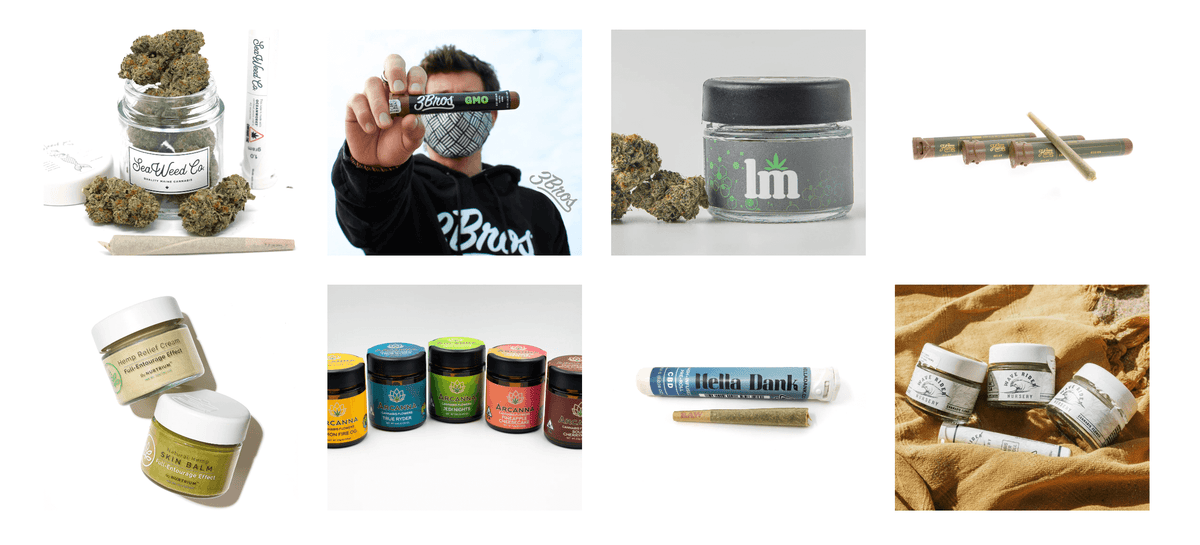
Plan paperboard boxes, displays, and inserts around the primary package, documented fiber content, printing requirements, assembly, and production timing.
Custom paperboard cannabis packaging works best when it is designed as part of a complete packaging system. The paperboard can provide structure, printable space, retail presentation, and organization, but it does not automatically supply every function the product may need.
Before starting artwork, define the paperboard component’s role, document the primary package it must fit into, and separate structural or branding decisions from requirements such as child resistance, tamper evidence, product contact, and barrier protection.
Paperboard can serve several roles in a cannabis packaging system:
Most of the current Sana Packaging paperboard options are for secondary packaging or accessories. They hold, organize, display, or protect a separate primary package rather than contacting the cannabis product directly.
That distinction matters. A paperboard box may provide opacity, printable area, organization, and protection from light scuffs or incidental handling. It should not automatically be treated as an airtight, odor-proof, moisture-proof, greaseproof, leakproof, or watertight package.
Those functions generally need to come from the primary container, liner, pouch, or another documented barrier component.
A custom box or insert should be designed around the finished primary package, not an isolated jar, tube, or vape component.
Measure the complete assembled configuration, including:
Small dimensional changes can affect whether a box closes correctly, whether an insert holds the product securely, and whether employees can assemble the package efficiently.
When possible, measure several production samples instead of relying on a single package. Container, label, and closure tolerances can create variation that is not obvious from a technical drawing alone.
The design also needs to account for product count and orientation. A six-count display, a five-pre-roll insert, and an individual vape cartridge box require different structures, even if they use similar materials.
Before approving the structure, determine:
Testing the complete system before production is one of the best ways to prevent fit and assembly problems.
Material selection should be based on documented fiber content and project requirements rather than broad environmental terminology.
Standard hemp paperboard used for qualifying outer-packaging projects generally contains approximately 25% hemp fiber and 75% post-consumer recycled paper. The documented composition applies to the paperboard component itself.
Sana Packaging’s custom 9ml concentrate jar displays use 18-point paperboard and are available in two material options:
Post-consumer waste, or PCW, is paper recovered after consumer use and processed into material for new paper products.
These percentages do not automatically describe inks, adhesives, coatings, labels, windows, metallic finishes, or other components added during conversion. They also do not prove that a finished package is recyclable, biodegradable, compostable, food-contact suitable, child-resistant, or appropriate for every product.
When comparing hemp paperboard packaging with PCW paperboard, consider the documented fiber composition alongside print appearance, surface variation, structural requirements, availability, order quantity, and budget.
Paperboard can contribute to a compliant packaging system, but the finished system must be evaluated on a component-by-component basis.
Standard paperboard boxes, displays, dividers, and inserts are not child-resistant on their own.
If a market requires child-resistant packaging, the paperboard component may need to be paired with a certified primary package. A secondary box does not inherit the primary package’s certification, and adding a new component can affect how the complete system is used.
Child resistance and tamper evidence are separate functions. One does not automatically provide the other.
Depending on the product and jurisdiction, tamper evidence may come from:
The selected method should be tested on the finished packaging system. Its placement can affect artwork, panel layout, opening instructions, and pack-out procedures.
Most current Sana Packaging paperboard components are intended for secondary use and do not contact cannabis directly.
Direct-contact applications require documentation for the exact paperboard, inks, adhesives, coatings, and intended product. Food-contact or product-contact suitability should never be inferred from fiber content alone.
Paperboard should also not be expected to replace the moisture, odor, oil, or oxygen barriers provided by an appropriate primary container or liner.
The amount of protection required depends on how the package will be filled, packed, shipped, stored, displayed, and opened.
Paperboard can help organize products and protect them from light handling, but it has limitations in wet conditions and under heavy crush, tear, abrasion, or oil exposure. Those conditions should be considered before selecting board thickness, structure, inserts, and finishes.
A dieline is the flat technical layout that defines where a paperboard component will be cut, folded, glued, and printed. It should be created from an approved structure and verified package dimensions.
A production-ready dieline may include:
Board thickness affects internal space, fold behavior, and finished dimensions. A structural drawing should account for the paperboard caliper rather than treating the material as having no thickness.
Cutouts and windows may improve product visibility, but they can also reduce structural strength or introduce additional materials. Plastic windows, laminations, metallic finishes, adhesives, and coatings may affect the package’s end-of-life options.
If fit, assembly, color, or retail presentation is critical, request a prototype or physical sample when available. A digital proof can confirm artwork placement and copy, but it cannot fully validate physical fit or production-line performance.
Artwork should begin with the approved dieline, not a general rectangular canvas.
Keep important text, logos, barcodes, and compliance information inside the designated safety areas. Background colors and images intended to reach an edge should extend through the bleed area.
During artwork development, confirm:
Full-color printing can turn the outside of a box or display into a consistent brand surface while also carrying required product information. However, adding copy late in the approval process can create crowding or require structural changes.
Review every visible panel before approving the digital proof. Check spelling, ingredient or product references, compliance copy, barcode data, orientation, folds, and areas that may be covered during assembly.
Proof approval should occur only after both the artwork and the physical package configuration are finalized.
Custom paperboard boxes can be developed for pre-roll tubes, vape cartridges and pens, concentrate jars, flower jars, and other qualifying packaging projects.
A custom box may include full-color printing, custom dimensions, inserts, dividers, compliance information, QR codes, barcodes, and eligible finishes or closures.
Pre-roll packaging boxes should be designed around the complete tube and closure. Vape cartridge packaging boxes need to account for the hardware format, product orientation, and any separate battery or transportation requirements. Jar boxes need enough clearance for the complete jar, lid, label, and tamper-evident component.
Custom outer-box projects are quote-based. Minimum order quantities and lead times depend on the structure, material, artwork, finishing requirements, and number of designs.
Explore the available paperboard cannabis packaging options or review the vape cartridge packaging guide for vape-specific planning considerations.
Sana Packaging’s custom 9ml concentrate jar paperboard displays are available in three formats:
The displays use 18-point paperboard and can be ordered in 30% hemp and 70% PCW paper or 100% PCW paper. One-sided full-color printing is included, and the displays are made in the United States.
The minimum order quantity is 250 displays per format, material, and design. Standard production is approximately 10–14 business days after final proof approval.
These displays are designed for Sana Packaging’s 9ml glass concentrate jars and compatible 38-400 lids. Jars and lids are sold separately, and the complete configuration should be tested before production.
The inks used on the current displays are TÜV-certified home compostable. That certification applies only to the inks. It does not mean the finished display is certified compostable or approved for direct product contact.
For a complete example of a jar, lid, label, tamper-evident packaging, and display, see the custom concentrate packaging guide.
The Pre-Roll Multipack Paper Insert is designed specifically for Sana Packaging’s 90mm Ocean Pre-Roll Multipack.
The black insert holds five pre-rolls up to 85mm long, accommodating most 0.5-gram to 1-gram pre-rolls. An adhesive strip secures the insert to the multipack’s inner tray.
The insert is sold separately in cases of 500. Blank, in-stock inserts usually ship the next business day.
It is not designed for the 114mm Slider Tin or 90mm Glass Jar. It is also not child-resistant. Child resistance is supplied by the compatible 90mm Ocean Pre-Roll Multipack closure.
No fiber content or recyclability claim should be made for this insert without documentation of the exact current component.
Minimum order quantities frequently apply per format, material, and design, not to the entire program.
For example, a six-count hemp paperboard display and a twelve-count PCW paper display are separate configurations. Different artwork versions or SKU designs may also be treated separately.
Build the project schedule backward from the required delivery date and include time for:
Published production estimates generally begin after final proof approval and do not replace the timing confirmed for an individual order. Complex structures, prototypes, multiple designs, special finishes, and delayed approvals can extend the schedule.
Before placing a full production order, test the system under conditions that represent actual use.
A practical review may include:
Record the exact components used during testing. A change to a jar, closure, label, band, or container supplier can change the finished dimensions and affect the approved paperboard structure.
Responsible paperboard claims should identify the component and the documented attribute.
For example, “the paperboard in this display is made from 100% post-consumer waste paper” is more precise than calling the finished package as a whole eco-friendly or compostable.
Clean, uncoated paperboard may be accepted by recycling programs where local infrastructure allows. Acceptance is not guaranteed. Fiber type, package size, inks, adhesives, coatings, laminations, metallic finishes, windows, tamper-evident components, cannabis residue, and local requirements can all affect the available end-of-life pathway.
Hemp or recycled content does not automatically make a finished package biodegradable or compostable. An ink certification applies to the ink, not every material in the converted package.
Keep supplier documentation for material composition and certifications, and make claims only at the level supported by that documentation.
A detailed project brief makes it easier to evaluate format, fit, cost, and timing.
Include:
Providing this information early helps identify whether an existing format will work or a custom structure is needed.
Custom paperboard packaging involves more than choosing a fiber blend and adding graphics. The strongest results come from defining the paperboard component’s role, designing it around the finished primary package, planning compliance and printing together, and testing the complete system before production.
Review Sana Packaging’s paperboard packaging options or learn more about the customization and printing process when preparing your project.
Last reviewed: October 13, 2026.
Packaging requirements vary by product and jurisdiction across the United States and Canada. Confirm current child-resistant, tamper-evident, labeling, product-contact, and other requirements with qualified regulatory or legal professionals before production.
Related resources: Printing & Labeling FAQ; Sustainability.

Learn how to evaluate cannabis topical packaging by jar size, material, product compatibility, closures, labeling, and customization. Thi...
Our expert team can take care of it. Just click Get Expert Install and we'll send you an email when it's ready!
If everything looks okay to you, you can Ignore this warning.


