
Cannabis Topical Packaging Guide: Jars, Compatibility & Labels
Learn how to evaluate cannabis topical packaging by jar size, material, product compatibility, closures, labeling, and customization. Thi...


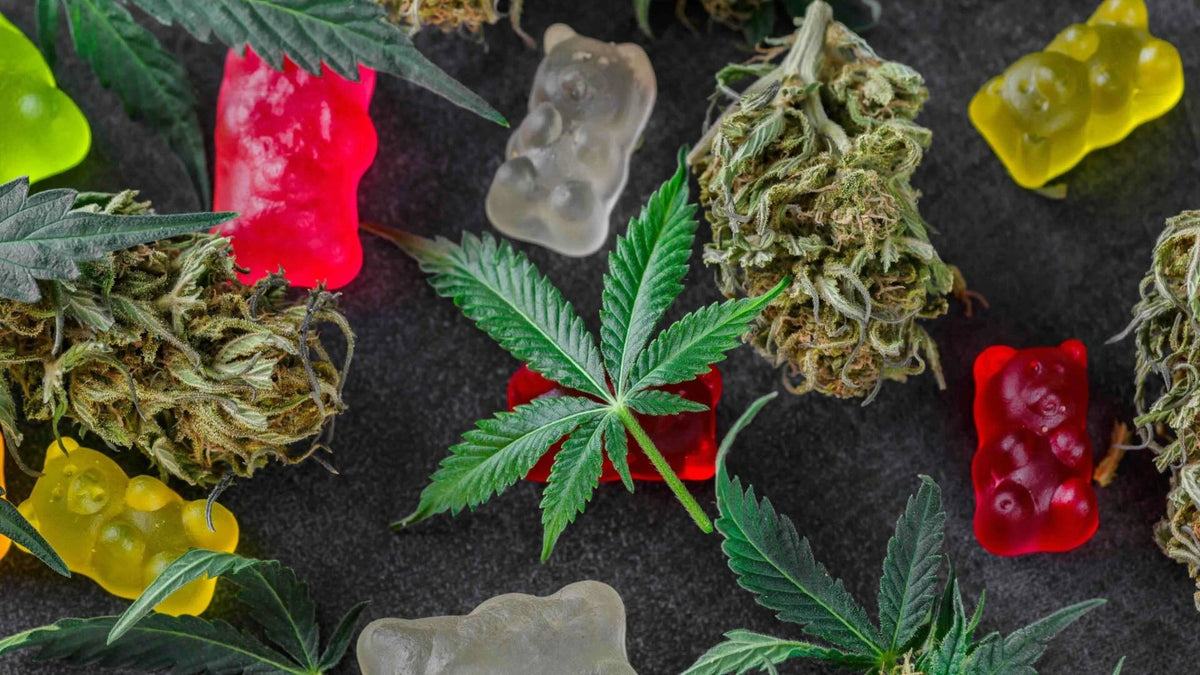
Learn how to evaluate cannabis edibles packaging by child resistance, barrier performance, food-contact suitability, serving format, labeling, and testing. This guide compares practical options for gummies, chocolates, baked goods, and other edibles.
Choosing cannabis edibles packaging starts with the finished product and serving configuration.
A soft gummy, a brittle chocolate, a high-fat baked good, and a dry mint can place very different demands on a package. The finished packaging system must protect the edible, support its intended shelf life, work with the filling and sealing process, provide enough space for required information, and satisfy the rules in every market where the product will be sold.
Child resistance is only one part of that decision. Brands must also evaluate resealability, tamper-evidence, barrier performance, food-contact suitability, serving configuration, labeling, production requirements, transportation, and consumer use.
This guide focuses primarily on immediate packaging for solid cannabis edibles. Beverage packaging involves various considerations related to dispensing, closures, headspace, transportation, compatibility, and regulatory requirements.
Last reviewed: August 24, 2026. This guide is for general informational purposes and does not constitute legal advice. Cannabis packaging and labeling requirements vary by jurisdiction, product, serving configuration, and package layer. Verify current requirements and complete legal and compliance reviews before approving packaging or artwork.
The package should match how the edible behaves, how it is produced, and how the customer will use it.
Start by documenting:
A package that works for a dry mint may not protect a gummy from moisture changes. A pouch containing several servings may require a different closure and consumer-use cycle than a single-serving package. A rigid jar may protect brittle pieces from crushing but can add weight, increase shipping requirements, and introduce additional closure components to evaluate.
Do not select a package based only on its stated capacity, material, or appearance. Test the actual edible and complete packaging system together.
The immediate package is the layer that directly contains or contacts the edible. Evaluate it separately from cartons, display boxes, shipping cases, and other secondary packaging.
Sana Packaging’s cannabis edibles packaging includes flexible and rigid formats that can be evaluated for solid edibles. The right format depends on the finished product, serving configuration, required package functions, production process, and target markets.
Flexible pouches can provide an efficient format for gummies, mints, chocolates, baked goods, and other solid edibles when the pouch structure, size, closure, and sealing method match the product.
Potential advantages include:
The pouch must still be evaluated as a complete packaging system. Confirm:
Sana Packaging’s Flexible PCR Pouches are available in stand-up and three-side-seal formats with child-resistant or standard zipper options, multiple and custom sizes, custom printing, and several finish and feature options.
A pouch size commonly described by a cannabis flower weight should not be treated as an edible-capacity recommendation. Edible density, dimensions, unit count, required headspace, product arrangement, and sealing requirements must be evaluated through fill testing.
Rigid packaging can be useful when an edible needs greater protection from crushing, a wide opening, repeated access, or a different shelf presentation.
Potential advantages include:
Important considerations include:
A closure with the correct diameter is not automatically appropriate. The thread profile, liner, application torque, child-resistant performance, and supporting documentation must correspond to the actual container-and-closure configuration.
A container’s stated fluid-ounce capacity is also not an edible fill recommendation. Products with different densities, shapes, textures, and unit counts may use the available space differently.
Explore Sana Packaging’s cannabis jars and lids when comparing rigid formats. Request samples and test the finished edible, container, closure, liner, seal, label, and any secondary package together.
Individual wraps can separate servings, reduce product-to-product contact, and provide additional protection against sticking, handling, or contamination.
They do not automatically satisfy child-resistant requirements.
For an individually wrapped configuration, determine:
The required package layer varies by jurisdiction, product classification, and serving configuration. Confirm the applicable requirements before relying on individual wraps to provide a regulatory function.
An outer paperboard carton can provide additional branding space, required label space, physical protection, or separation between individual units.
The carton is a secondary package layer. It does not automatically replace food-contact, barrier, child-resistant, tamper-evident, opacity, or resealability functions assigned to the immediate package.
Do not assume that information placed on an outer carton satisfies a requirement that must appear on the immediate container.
If a carton is included, identify the specific function it provides. Evaluate whether that function justifies the additional material, vendor, production step, assembly process, inventory item, and transportation volume.
Child resistance, resealability, and tamper evidence serve different package functions. Determine which functions are required, which package layer must provide them, and whether they must remain effective after the package is opened.
Child-resistant packaging is designed to make a package significantly difficult for young children to open while remaining usable by adults. Child-resistant does not mean childproof.
The federal special-packaging framework appears in 16 CFR Parts 1700 through 1702. Many state cannabis requirements reference the effectiveness specifications in 16 CFR 1700.15 and testing procedures in 16 CFR 1700.20. Review the Consumer Product Safety Commission’s Poison Prevention Packaging Act guidance for an overview of special packaging.
The CPSC does not approve, certify, or endorse individual packages, designs, manufacturers, or testing firms. Request documentation for the exact package configuration and confirm that the applicable testing standard matches the requirements in every target market.
Do not assume that:
Requirements may distinguish between:
Confirm which standard applies to the edible, serving configuration, package layers, and intended consumer-use cycle.
A resealable package can be closed again after opening.
This function is especially important when a package contains multiple servings. The zipper, lid, or other closure must remain usable after filling, sealing, transportation, opening, product removal, and repeated consumer access.
A conventional reclosable zipper or lid is not automatically child-resistant. Likewise, a child-resistant package is not automatically suitable for repeated use.
Test the actual filled package to determine whether:
Tamper-evident packaging provides visible evidence that the package may have been opened or altered.
Potential features include:
A tamper-evident feature does not automatically make a package child-resistant. A child-resistant closure does not automatically provide visible evidence of opening.
If tamper evidence is required, identify the component that provides it and test the finished package. Confirm that the component:
California demonstrates why these functions must be evaluated separately.
The California Department of Cannabis Control currently identifies edibles as requiring multiple-use child-resistant packaging. A package containing more than one serving is not required to remain child-resistant when each individual serving is packaged in child-resistant packaging. Confirm the complete conditions in California’s child-resistant packaging guidance.
California’s final-form packaging checklist separately addresses tamper evidence, resealability for packages containing more than one serving, and opacity for edibles.
New York’s current guidance requires cannabis retail packages to:
New York states that these retail-package requirements continue to apply when the product is placed inside another package. Review the current Part 128 Packaging & Labeling Guidance.
These examples are not nationwide rules. Build a separate checklist for each market where the edible will be sold, and confirm the current requirements before approving the final package.
The package should protect the edible throughout its intended shelf life and consumer-use cycle.
Evaluate the product’s sensitivity to:
The required performance depends on the finished formula, product geometry, desired shelf life, storage conditions, transportation environment, and package configuration.
Moisture transfer can affect texture, appearance, flavor, and stability.
Depending on the formula and environment:
A package described as moisture-resistant does not automatically provide the barrier required by every edible. Confirm the applicable material specifications and test the finished product over its intended shelf life.
Oxygen and light can affect ingredients, flavors, colors, cannabinoids, and other product characteristics.
Do not assume that a clear jar, opaque pouch, metalized film, printed layer, label, or outer carton provides the required protection. Determine which packaging layer provides the necessary barrier and confirm its performance with the finished edible product.
If a clear window or container is being considered, evaluate both the formula’s light sensitivity and the visibility requirements in every target market.
Chocolate, baked goods, and other products containing oils or fats may interact differently with films, coatings, liners, adhesives, inks, and labels.
Evaluate whether oil or grease can:
Use the complete finished formula during testing. An unfinished base, substitute product, or general material description may not reproduce the same interaction.
Barrier performance also includes physical protection.
A flexible pouch may require sufficient puncture, tear, and compression resistance. A rigid package may require appropriate headspace, dividers, inserts, case packing, or shipping protection.
Brittle, coated, or individually formed products may need a configuration that limits movement and product-to-product contact.
Test the filled package under the stacking, vibration, dropping, compression, orientation, and temperature conditions it may encounter during distribution.
Avoid describing a package as airtight, shelf-stable, leakproof, or protective without supporting documentation and finished-product testing.
Food-contact suitability depends on the exact material, food type, temperature, duration of contact, and intended conditions of use.
The FDA defines a food-contact substance as a substance intended to be used as a component of materials involved in manufacturing, packing, packaging, transporting, or holding food when the substance is not intended to have a technical effect in the food. Food-contact substances can be used in films, containers, coatings, adhesives, colorants, and other package components. Review the FDA’s food-contact terminology and food types and conditions of use.
Evaluate:
Request documentation for the exact material and package structure being considered. Confirm that any applicable authorization, specification, certification, or supplier statement covers the intended food type and conditions of use.
The FDA notes that the regulatory status of a food-contact component includes the identity of the substance, applicable specifications, and limitations on its conditions of use. Review the FDA’s guidance for determining the regulatory status of food-contact materials.
Terms such as “food-grade,” “food-grade certified,” and “FDA-compliant” should correspond to the actual material, supplier documentation, and intended use. Do not treat those terms as blanket approval of the finished package.
Food-contact documentation does not independently establish:
Evaluate the finished edible and complete packaging system together under production-representative conditions.
Package size should be based on the finished edible and the complete production configuration, rather than on nominal capacity alone.
Confirm:
A package that is too small can interfere with filling, sealing, closure engagement, labeling, or product protection. It may also crush the edible, contaminate a zipper or seal area, or leave insufficient room for required information.
An oversized package can increase material use, transportation volume, product movement, and the risk of crushing or breakage.
Request samples and complete a production-style fill test before ordering full quantities. Use the finished edible, the intended unit count, the production equipment, the package components, and the sealing process.
Cannabis edible labels can require significant space. Build the market-specific label checklist while comparing package formats and dimensions.
Depending on the product and jurisdiction, required information may include:
The exact content, wording, placement, formatting, and type size vary by jurisdiction.
Obtain required language and symbol files from current official sources. Do not rely on an old package, a competitor’s label, or a general online checklist. Preserve required wording, capitalization, formatting, and minimum type sizes exactly when the applicable rule specifies them.
For additional label-planning guidance, read Cannabis Labeling Requirements: Your Compliance Guide.
Measure the actual usable area rather than relying on the package’s overall dimensions.
Account for:
A label or printed design that extends into a functional area may interfere with sealing, opening, child-resistant operation, resealing, or tamper evidence.
Small packages may require an extended-content label, an outer carton, a secondary label panel, or another approved method to present the required information. Confirm that the selected approach is permitted in each target market.
Do not assume that placing information on an outer package satisfies a requirement assigned to the immediate package.
Determine which information can be incorporated into the primary artwork and which information must change by batch, lot, SKU, formula, or market.
Variable information may include:
Plan how this information will be printed, applied, inspected, and corrected before approving the final artwork.
Confirm that variable-data printing:
Cannabis edible packaging should not imitate conventional candy, cookies, snacks, cereal, beverages, or other products commonly marketed to children.
Review the complete presentation, including:
New York’s current guidance prohibits cannabis packaging that uses cartoons or mascots, resembles products commonly associated with youth, uses certain youth-associated characters or imagery, or uses terms such as “candy” and alternative spellings except in limited cultivar-name circumstances.
New York also emphasizes that the complete design must be evaluated. The removal of particular examples from the guidance should not be treated as approval of those features. Review the current Part 128 Packaging & Labeling Guidance.
Other jurisdictions use different language, examples, and standards. Complete a separate youth-appeal review for every target market.
Health, wellness, therapeutic, organic, and nutritional claims can create additional regulatory issues. Review the product name, label, website, advertising, testimonials, and other promotional language separately from the physical package.
A disclaimer does not automatically correct an impermissible claim or youth-appealing presentation. Complete regulatory and legal review of the finished product, package, label, and promotional materials before launch.
Compatibility and production testing should reproduce the finished product, package, production process, storage conditions, transportation environment, and consumer-use cycle as closely as possible.
A packaging supplier can provide samples, material specifications, and available package documentation. The product manufacturer remains responsible for evaluating the finished edible and complete packaging system.
Repeat the relevant testing when any of the following change:
Customization should be planned around the package’s functional areas and applicable regulatory requirements.
Before developing or approving artwork, confirm:
Windows can create product-visibility, opacity, or light-protection concerns. Heavy ink coverage, coatings, labels, and finishes may affect sealing, flexibility, label adhesion, material recovery, or production performance.
A flat digital proof does not show every characteristic of the assembled package. Review the artwork on a production-representative sample and confirm its alignment with the zipper, seal, tear notch, closure, tamper-evident feature, fill line, product arrangement, and secondary packaging.
Sana Packaging offers custom printing for compatible flexible pouches, label printing and application, and other customization options. Review the Flexible PCR Pouches and Printing & Labeling services for current options.
Complete artwork preflight, proof approval, package testing, and a finished-unit review before full production.
Define the inspection criteria before the pilot run and full production.
Depending on the package, quality checks may include:
Document acceptable tolerances, inspection frequency, rework procedures, and the person responsible for final approval.
A hand-filled sample may not reveal problems that appear at normal production speed. Complete a pilot run using the intended edible, packaging, operators, equipment, artwork, sealing settings, inspection process, and production sequence.
A package can use recycled, reclaimed, or plant-based material and still fail a child-resistant, barrier, food-contact, labeling, compatibility, or production requirement.
A package that satisfies the applicable regulations can also use more material than necessary or be difficult to collect and recover after use.
Evaluate material selection alongside package performance, but do not treat the two workstreams as interchangeable.
Consider:
A lighter package is not automatically the best choice. A rigid package is not automatically wasteful. A package containing recycled material is not automatically compatible with the edible or accepted by local recycling programs.
Evaluate the finished product, complete package configuration, production process, distribution plan, and consumer-use cycle together.
State material requirements are not uniform.
New York’s current adult-use guidance generally requires plastic cannabis product packaging to contain at least 25% post-consumer recycled content. The guidance provides exceptions for certain plastic components needed to meet child-resistant requirements and items for which a version containing PCR is unavailable. It also provides new licensees with a 12-month period from licensure to comply with the minimum PCR-content requirement.
Review the current conditions, exceptions, documentation expectations, and reporting requirements in New York’s Part 128 Packaging & Labeling Guidance.
Do not apply New York’s material rule to another jurisdiction without reviewing that market’s requirements. Likewise, do not assume that satisfying a recycled-content requirement establishes compliance with the package’s other regulatory or functional requirements.
A material claim supported for one component should not automatically extend to the entire package.
Document:
For example, a flexible pouch may contain multiple film layers, a zipper, inks, coatings, and adhesives. A recycled-content claim supported for part of that structure should not be presented as a claim about the entire package unless the supporting documentation covers the complete configuration.
A jar made with recycled or reclaimed content may be paired with a closure, liner, label, seal, and carton made from different materials. Keep each claim tied to the component and percentage supported by the available documentation.
Use precise statements such as:
Use those statements only when they match the documentation for the exact component being ordered.
A resin identification code or material type does not guarantee that a finished package will be accepted by every recycling or composting program.
Collection and recovery can be affected by:
Review the finished package rather than assigning an end-of-life claim based on one component or material.
The Federal Trade Commission advises marketers to avoid broad, unqualified environmental-benefit claims and to support environmental claims with clear, specific qualifications. Its guidance addresses recycled content, recyclability, compostability, degradability, renewable materials, source reduction, and other common claims. Review the FTC’s Environmental Claims guidance.
Avoid broad or unqualified terms such as “green,” “eco-friendly,” “recyclable,” “biodegradable,” “compostable,” or “sustainable” unless the claim is accurate, adequately supported, and appropriately qualified for the context in which it appears.
Learn more about Sana Packaging’s approach to responsible materials.
Use a written checklist to evaluate the edible, packaging, label, production process, distribution conditions, and target markets as a single, integrated system.
Repeat the relevant review when any of the following change:
A package previously approved for another edible, configuration, or market should not be assumed to work for the new product.
Sana Packaging can help cannabis brands compare immediate package formats, compatible components, responsible materials, and customization options for solid edibles.
Our team can help you:
Start with the finished edible, intended fill quantity, serving configuration, target markets, and expected consumer-use cycle. Then test production-representative samples containing every intended package component.
A packaging supplier can provide samples, specifications, customization support, and documentation for available packages. The product manufacturer remains responsible for determining product compatibility, validating the finished packaging system, and completing regulatory and legal reviews.
Explore Sana Packaging’s cannabis edibles packaging, request free samples from the applicable product page, or contact the sales team to discuss a complete edibles packaging configuration.
TALK THROUGH MY PACKAGING REQUIREMENTS →
The best package depends on the edible’s formula, texture, dimensions, serving configuration, barrier requirements, shelf life, production process, consumer-use cycle, and target markets.
Flexible pouches can provide lightweight, customizable packaging. Rigid jars and containers can provide greater structural protection and a different consumer experience. Test the finished edible and complete package configuration before choosing a format.
Many jurisdictions require cannabis edibles to use child-resistant packaging, but the applicable package layer and performance requirements vary.
Determine whether the immediate package, individual serving, outer package, or complete configuration must be child-resistant. Confirm whether child resistance must continue after opening and whether the available documentation matches the exact package being used.
Many jurisdictions require packages containing multiple servings to be resealable. Some also require the package to remain child-resistant throughout repeated use.
A conventional reclosable zipper or lid is not automatically child-resistant. Confirm both requirements and test repeated opening and closing with the actual filled package.
Child-resistant packaging limits a young child’s ability to access the product. Tamper-evident packaging provides visible evidence that the package may have been opened or altered.
A package can provide one function without providing the other. Assign each required function to a specific component and test the complete configuration.
Flexible pouches can be suitable for many solid edibles when the pouch structure, closure, size, and sealing method match the product.
Evaluate moisture, oxygen, light, oil, odor, puncture, crushing, food-contact, child-resistant, resealability, tamper-evident, and production requirements before approving the pouch.
Barrier requirements depend on the complete formula, desired shelf life, storage conditions, and distribution environment.
An edible may require protection from moisture, oxygen, light, aroma loss, oil migration, contamination, punctures, crushing, or product-to-product contact. Product-appropriate stability and compatibility testing should determine whether the finished package provides sufficient protection.
Glass and plastic jars can be appropriate for some edibles when their capacity, opening, closure, liner, food-contact suitability, barrier performance, and regulatory characteristics match the product.
A jar that works for one edible should not automatically be assumed to work for another. Test the finished formula, jar, closure, liner, seal, label, and secondary packaging together.
Not automatically.
Some jurisdictions permit specific individually wrapped configurations, while others impose requirements on the outer retail package, the immediate package, or the complete configuration. Confirm which layer must satisfy the applicable child-resistant standard.
Opacity requirements vary by jurisdiction.
California’s current final-form packaging checklist identifies opacity as a requirement for edible packages, while other markets apply different visibility rules. Confirm whether opacity must be supplied by the immediate package, another retail layer, or a permitted combination of layers before using a clear window or container.
Depending on the jurisdiction, common requirements may include product identity, net contents, ingredients, allergens, cannabinoid content, potency, serving information, tracking data, dates, licensee information, laboratory information, warnings, and universal symbols.
Exact wording, placement, capitalization, formatting, and type size vary by market. Build a separate label checklist using current official sources.
Paperboard can be used as an outer carton or another secondary package layer when appropriate.
An outer carton does not automatically replace the immediate package’s food-contact, barrier, child-resistant, tamper-evident, opacity, or resealability functions. Identify the specific function the carton provides and confirm that the configuration satisfies the applicable requirements.
Test the actual edible in the production-intent package.
Replicate filling, sealing, closure application, storage, transportation, and repeated consumer use. Inspect the product and package over time, document the test conditions and results, and retain the approved component specifications and representative samples.
Yes, when the finished package still satisfies the applicable food-contact, barrier, child-resistant, labeling, compatibility, production, and product-protection requirements.
Recycled or reclaimed content does not automatically establish compliance, compatibility, or recyclability. Keep material claims component-specific and support them with documentation for the exact package being ordered.
Cannabis edibles packaging should be selected as a complete system.
Start with the finished product and serving configuration. Define the required barriers. Determine which components and package layers provide child resistance, resealability, tamper evidence, food-contact suitability, product protection, and required information.
Then assemble and test a production-representative configuration containing the actual edible, immediate package, closure, zipper, liner, seal, individual wraps, label, artwork, tamper-evident component, insert, and secondary packaging.
Before production, create a product-specific written checklist, confirm the applicable documentation, and complete regulatory and legal reviews. Revisit that work whenever the product, package, supplier, artwork, process, target market, guidance, or rule changes.
For a broader market-by-market review process, read State Cannabis Packaging Regulations: A Complete Guide.
TALK THROUGH MY PACKAGING REQUIREMENTS →
Related resources: Flexible Packaging FAQ; Jars & Lids FAQ; Printing & Labeling FAQ.

Learn how to evaluate cannabis topical packaging by jar size, material, product compatibility, closures, labeling, and customization. Thi...
Our expert team can take care of it. Just click Get Expert Install and we'll send you an email when it's ready!
If everything looks okay to you, you can Ignore this warning.


