
Cannabis Edibles Packaging Guide: Child Resistance, Barriers, Labels & Formats
Learn how to evaluate cannabis edibles packaging by child resistance, barrier performance, food-contact suitability, serving format, labe...


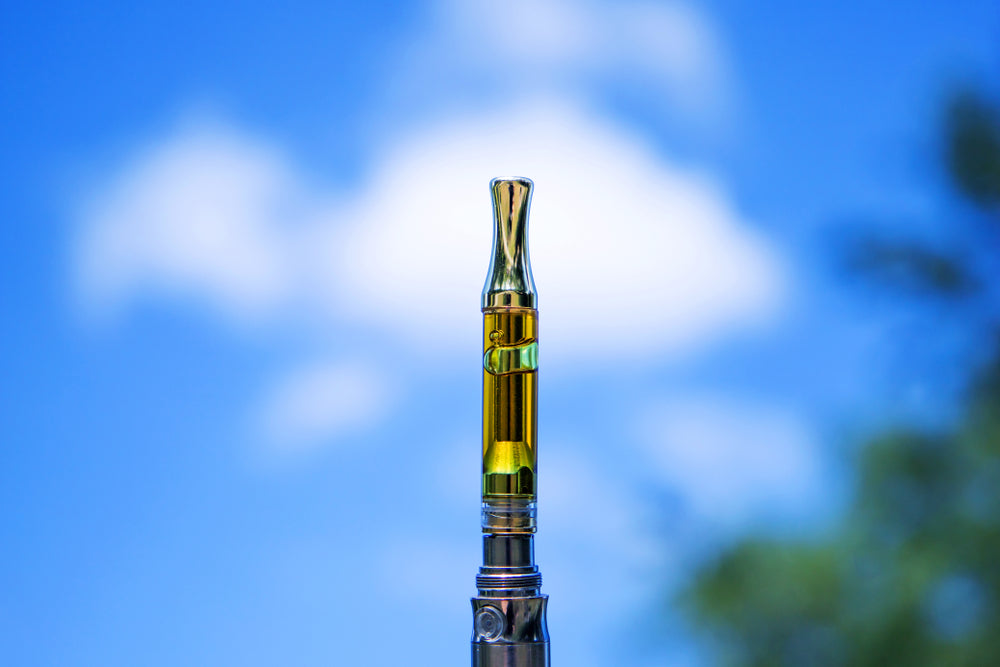
Choosing packaging for a cannabis vape product starts with the complete hardware configuration, not just its oil capacity. This guide explains how to evaluate fit, formats, child resistance, labeling, batteries, and production requirements.
Choosing packaging for a cannabis vape product starts with the complete hardware configuration, not just its oil capacity.
Two cartridges described as 0.5g or 1g can have different lengths, diameters, mouthpieces, protective caps, and overall profiles. An assembled vape pen adds a battery and may include buttons, charging ports, airflow openings, or other features that affect fit. All-in-one devices, multipacks, and bundled kits introduce additional requirements.
The outer package must fit the finished product, protect it during packing and distribution, work with the intended assembly process, provide enough space for required information, and comply with the rules in every market where it will be sold.
Sana Packaging offers vape cartridge and vape pen packaging in several formats, including rigid tubes, containers, flexible pouches, custom paperboard packaging, inserts, tamper-evident components, and printing and labeling options.
Sana Packaging supplies outer packaging. It does not supply vape cartridges, cannabis oil, batteries, or other vape hardware.
This guide provides a framework for selecting and testing the outer-package components as a complete packaging system. It focuses on the decisions that must be made before ordering packaging, approving artwork, or beginning production.
Last reviewed: October 13, 2026. This guide is for general informational purposes and does not constitute legal advice. Cannabis packaging, labeling, child-resistance, tamper-evidence, battery, and transportation requirements vary by jurisdiction, product, hardware configuration, package configuration, and intended use. Verify current requirements and complete a legal and compliance review before approving packaging or artwork.
“Vape cartridge packaging” and “vape pen packaging” can refer to several different product configurations.
A brand may be packaging:
These configurations should not be treated as interchangeable.
A rigid tube that fits a loose cartridge may not fit the same cartridge once the cartridge is attached to a battery. A package that accommodates one vape pen may provide too much movement for a shorter cartridge or too little clearance for a wider all-in-one device.
Start by documenting exactly what the finished retail package will contain and how the product will be arranged when the package is closed.
Confirm:
The cartridge or device should be evaluated together with every component that will be present in the finished package.
The cartridge or vape device and its outer retail packaging perform different functions.
The hardware may include:
The outer packaging system may include:
An outer package can help organize, protect, present, and restrict access to a vape product. It cannot establish that the cartridge, oil-contact components, battery, seals, or complete electronic device are safe or suitable for their intended use.
It also cannot correct a leaking cartridge, an unstable device, an incompatible oil formulation, or defective hardware.
Evaluate the hardware and outer packaging as related but separate systems. Request documentation from the appropriate supplier for each component and do not extend an outer-package claim to the product inside it.
Oil capacity alone does not determine package fit.
A 0.5g or 1g designation describes the intended contents but does not establish the cartridge’s external dimensions. The same principle applies to terms such as 510 cartridge, vape pen, disposable vape, or all-in-one device.
Measure the actual production hardware in the condition in which it will be packed.
Record:
For assembled devices, measure the cartridge and battery together. For all-in-one devices, measure the complete finished unit. For multipacks, measure the complete planned arrangement rather than multiplying the dimensions of a single unit.
Compare these measurements with the package’s usable interior dimensions, not only its advertised exterior length.
A nominally 78mm tube, for example, does not necessarily provide 78mm of usable interior length. The base, wall thickness, closure, locking features, and required closure engagement can reduce the available space.
Allow enough clearance for the package to close and operate correctly without allowing excessive movement.
A package can close around a vape product and still be a poor fit.
Evaluate whether the finished configuration:
Excessive empty space can allow the product to move, rotate, or strike the package walls. Insufficient clearance can stress the hardware, interfere with closure operation, complicate assembly, or make the product difficult to remove.
If movement must be controlled, determine whether the package geometry is sufficient or whether the configuration requires a custom insert, cushion, or secondary structure.
Test production-representative hardware in physical package samples before placing a full order. Include the complete device, protective caps or plugs, inserts, labels, tamper-evident components, and any printed materials that will be present in the finished configuration.
Vape products can be packaged in rigid tubes, larger containers, flexible pouches, paperboard boxes, or systems that combine multiple components.
The right format depends on:
Package length is an initial screening tool, not proof of compatibility. Always compare the product with the usable interior dimensions and test production-representative samples.
A 78mm rigid tube can fit many 0.5g and 1g vape cartridges when the cartridge is packaged without a battery.
Sana Packaging currently offers several 78mm options:
These tubes use different materials and closure mechanisms, but they share a similar general use case: individual loose cartridges that fit within the available interior space.
Do not assume that every 0.5g or 1g cartridge will fit. Mouthpiece shape, protective caps, hardware diameter, and total length can vary. Request samples and test the exact filled cartridge in its final packing configuration.
A 110mm tube can accommodate many assembled vape pens measuring up to approximately 10cm.
Current options include:
Both formats use certified child-resistant two-piece closures.
The stated 10cm fit is a starting point. Confirm the complete length and diameter of the cartridge-and-battery assembly, including the mouthpiece, base, button, charging port, and any protective components.
Also confirm that the device can be inserted and removed without pressing a button, damaging the hardware, or interfering with the package closure.
The 116mm Pop-Top Ocean Tube provides another rigid option for many compatible vape pens. It is made from 100% reclaimed ocean-bound polypropylene and uses a certified child-resistant pop-top closure.
Its 116mm format and 19mm opening may accommodate devices that do not fit narrower or shorter tube formats, but they do not guarantee compatibility with every vape pen.
A larger tube can also leave more empty space around a shorter or narrower device. Evaluate whether the product will move excessively and whether an internal component is necessary to stabilize it.
A larger rigid container can provide more flexibility when a tube is too narrow, when several units must be packaged together, or when additional components are included.
The Sana Hemp Container can provide outer packaging for select vape cartridges and other cannabis products. It is made from a 100% plant-based, petroleum-free hemp plastic biocomposite and uses a certified child-resistant pinch-and-slide closure.
Its broader container format also provides more room for branding and compliance labeling than a narrow tube.
A larger container may be appropriate for:
Additional space does not automatically improve protection. Multiple products can collide, rotate, or become disorganized unless the package geometry or an insert controls their movement.
Request a sample and test the exact hardware, unit count, arrangement, insert, label, and other finished-package components before approving the configuration.
A Flexible PCR Pouch can provide a lightweight, customizable outer package for compatible cartridges, vape pens, all-in-one devices, or multipacks.
Pouches can offer:
A pouch is child-resistant only when the exact configuration uses a documented child-resistant zipper. A standard zipper or pouch without a zipper should not be described as child-resistant.
When the pouch is filled and properly heat-sealed above the zipper, the tear-open section can provide tamper evidence. Child resistance and tamper evidence remain separate package functions.
A flexible pouch does not provide the same structural protection as a rigid tube or container.
A cartridge or device may require an insert, tray, protective cap, internal wrap, or another component to reduce impact and movement. The selected film structure and closure must also be evaluated based on the product, intended shelf life, distribution conditions, and applicable market requirements.
If a pouch contains an assembled battery-powered device, confirm that the finished configuration protects the device from damage and inadvertent activation.
Custom paperboard packaging can provide branding space, organize the retail presentation, hold instructions, and support single-unit or multipack configurations.
A paperboard box may be used:
Paperboard packaging and inserts should be designed around the actual hardware and complete package configuration.
A paperboard box or insert does not automatically provide child resistance, tamper evidence, impact protection, or battery-transport compliance. Determine which component is responsible for each required function.
An insert should solve a specific packaging problem.
Possible functions include:
The insert must be developed around the product’s actual shape, dimensions, weight, and intended orientation.
Evaluate:
A generic cavity based only on cartridge capacity or overall length may not adequately secure the hardware. Small differences in mouthpieces, bases, batteries, and all-in-one device profiles can substantially change insert fit.
Custom paperboard inserts can be developed for compatible vape packaging configurations. There is no single stock insert that should be assumed to fit every cartridge or device.
After identifying a possible package format, assemble a complete production-representative sample.
Include:
Test the sample through the intended sequence of packing, storage, transportation, retail display, opening, repeated use when applicable, and disposal.
The final decision should be based on the system’s overall performance, not on the advertised package length, oil capacity, material, or appearance alone.
A package designed for a vape cartridge or vape pen is not automatically child-resistant.
Child resistance depends on the complete package and closure configuration. A locking lid, pop-top closure, zipper, paperboard structure, or another opening mechanism should not be described as child-resistant unless the exact configuration is supported by documentation.
The federal special-packaging framework appears in 16 CFR Parts 1700 through 1702. The Consumer Product Safety Commission’s Poison Prevention Packaging Act guidance describes special packaging as packaging designed to be significantly difficult for children under five to open while remaining usable by adults.
The effectiveness specifications appear in 16 CFR 1700.15, and the testing procedures appear in 16 CFR 1700.20.
State cannabis programs may reference these specifications or impose additional requirements.
Cannabis brands must confirm:
Child-resistant does not mean childproof.
A child-resistant tube may provide the required child-resistant function when placed inside a conventional paperboard box. In that configuration, the tube, not the paperboard box, provides child resistance.
If the cartridge or device is placed directly into a pouch or paperboard package, confirm whether that component provides child resistance and whether the exact configuration has supporting documentation.
Child resistance, resealability, and tamper evidence are separate package functions:
A child-resistant package may be resealable without providing visible tamper evidence. A tamper-evident band, label, or seal may indicate that a package has been opened without making it child-resistant. A conventional reusable package may be resealable without satisfying either requirement.
Compatible tamper-evident options may include:
Map each required function to the component responsible for providing it. Then test the complete package after the cartridge or device, labels, inserts, paperboard components, and tamper-evident features have been added.
A loose vape cartridge without a battery requires a different transportation configuration than an assembled vape pen or an all-in-one device containing a battery.
Lithium batteries are regulated as hazardous materials under the U.S. Department of Transportation’s Hazardous Materials Regulations. The requirements can depend on the battery type, size, chemistry, configuration, condition, transportation method, and whether the battery is installed in equipment. Review the Pipeline and Hazardous Materials Safety Administration’s lithium-battery transportation resources.
If the retail package contains a battery-powered device, confirm:
PHMSA’s Lithium Battery Guide for Shippers provides scenario-based guidance for lithium cells, batteries, and battery-powered devices transported in different configurations.
The battery manufacturer, hardware supplier, shipper, and carrier may each hold information needed to evaluate the shipment. Obtain the appropriate documentation before selecting or approving the transportation configuration.
A child-resistant retail tube, pouch, container, or paperboard box does not automatically satisfy battery-transportation requirements. The retail package may need to be placed within additional shipping packaging designed, prepared, and marked for the applicable mode of transportation.
Likewise, transportation documentation for a battery does not establish that the retail package satisfies cannabis child-resistance, tamper-evidence, labeling, or product-protection requirements.
Evaluate the cannabis-packaging and battery-transportation requirements together, but do not treat them as interchangeable.
A vape packaging system may combine several materials:
A claim supported for one component should not automatically be assigned to the complete package.
For example, a rigid tube made from 100% post-consumer recycled polypropylene does not establish the recycled content of its label, adhesive, tamper band, paperboard box, cartridge, or electronic device.
Similarly, a package described as food-grade or FDA-compliant does not establish the safety or suitability of:
The FDA explains that food-contact substances can include packaging materials, coatings, adhesives, colorants, and other components that may come into contact with food. Their authorized uses depend on the material and expected conditions of contact. Review the FDA’s food-contact information.
In many vape configurations, the outer retail package surrounds sealed hardware and does not directly contact the cannabis oil. Determine the actual contact pathway before evaluating food-contact documentation or making related claims.
The term FDA-compliant should not be interpreted as FDA-approved.
Request documentation that corresponds to the exact package and component being ordered. Confirm:
Environmental claims require the same component-level approach.
The FTC’s Green Guides address how marketers should substantiate and qualify environmental claims. The FTC advises against broad, unqualified claims such as “green” or “eco-friendly” and states that recyclable claims should be qualified when appropriate recycling facilities are not available to at least 60 percent of the consumers or communities where the product is sold. Review the FTC’s summary of the Green Guides.
Material-specific limitations include:
A resin identification code identifies a type of plastic. It does not guarantee that the finished package will be accepted by every recycling program. Package size, color, labels, adhesives, residue, mixed materials, local infrastructure, and sorting practices can affect recovery.
Use precise, qualified language supported by current documentation. Do not extend a material, recycled-content, food-contact, recyclability, compostability, or environmental claim beyond the component and conditions it covers.
Learn more about Sana Packaging’s approach to responsible materials.
Vape packaging can support pressure-sensitive labels, direct printing, custom-printed flexible pouches, custom paperboard packaging, or a combination of methods.
The right approach depends on:
Customization options vary by product. Some rigid packages support labels and direct printing, while some formats currently support labels only.
Select the package before finalizing the artwork. Confirm the available customization method and obtain the current product-specific template before developing or approving the design.
Pressure-sensitive labels can accommodate multiple SKUs, regulatory information, barcodes, batch information, and other variable content.
Before approving a label, confirm:
Curved and narrow packages require particular attention to label size, orientation, and application. A label that is too large may lift, wrinkle, overlap a closure, obscure opening instructions, or interfere with the package’s operation.
Test the actual label material and adhesive on the finished package. Surface texture, resin, coatings, temperature, handling, and storage conditions can affect adhesion.
Label printing and application means the labels are printed and applied to the packaging before shipment. This can reduce the number of vendors, production steps, and in-house labor required to prepare shelf-ready packaging.
Direct printing applies artwork to the package surface without using a separate pressure-sensitive label.
This method can create an integrated presentation, but printable areas and available processes vary by product.
Before approving direct printing, confirm:
Direct printing may be less flexible than labels when a brand manages numerous SKUs or frequently changing regulatory information. Determine which content can remain fixed and whether variable information will still require a label or another production step.
Custom-printed pouches and paperboard boxes can provide more space for branding, instructions, regulatory information, and multipanel artwork than a narrow rigid tube.
Artwork development should account for:
A flat digital proof cannot fully demonstrate how artwork will look on a filled pouch or assembled paperboard package. Review both the proof and a production-representative physical sample whenever possible.
Complete artwork preflight, proof approval, and a finished-package review before full production.
Learn more about Sana Packaging’s Printing & Labeling services.
A package that performs well during a sample review must also work consistently during production.
Map the complete packing sequence before ordering full quantities.
A possible workflow may include:
1. Inspect the cartridge or device.
2. Install any protective caps or plugs.
3. Place the product in its required orientation.
4. Add an insert, instructions, or accessories.
5. Place the product into the tube, container, pouch, or paperboard package.
6. Engage and verify the child-resistant closure.
7. Apply labels or complete any variable-data printing.
8. Apply the tamper-evident component.
9. Inspect the finished unit.
10. Place the unit into its shipping configuration.
The appropriate sequence will depend on the package and customization method.
A label or tamper band may need to be applied after the child-resistant closure has been fully engaged. A paperboard box may need to be assembled before an insert can be loaded. A pouch may require separate filling, zipper-closing, and heat-sealing steps.
Evaluate:
If the package contains a battery-powered device, include a step to confirm that the device has not been activated and remains protected from inadvertent activation.
Run a small production trial using the intended hardware, packaging, artwork, operators, equipment, and assembly sequence. A hand-assembled prototype may not reveal issues that appear at normal production speed.
Validation should reflect the conditions the finished package is expected to encounter.
Depending on the product and distribution plan, evaluate:
Testing the outer package does not replace cartridge, battery, oil, hardware, or electronic-device testing. Complete the appropriate workstream for every component in the finished product.
Document:
Repeat the relevant evaluations when the hardware, package, supplier, material, closure, insert, artwork, customization method, or packing process changes.
The package-selection process should answer five questions:
1. What exactly is being packed? Define the loose cartridge, assembled pen, all-in-one device, multipack, or bundle.
2. Does the complete hardware fit? Compare production hardware with usable interior dimensions and required clearance.
3. Which component provides each required function? Assign child resistance, tamper evidence, movement control, branding, labeling, and transportation functions to specific components.
4. Can the package be produced consistently? Test the complete workflow for packing, customization, inspection, and shipping.
5. Does the finished configuration satisfy every target market? Verify current cannabis, labeling, battery, transportation, and other applicable requirements before approval.
Start with production-representative hardware and physical package samples.
Sana Packaging can help compare compatible stock formats, identify customization options, and evaluate whether a custom pouch, paperboard package, insert, or tamper-evident component may be appropriate.
Explore Sana Packaging’s vape cartridge and vape pen packaging, request samples from the applicable product page, or contact the sales team to discuss a complete packaging configuration.
Related resources: Plant-Based Hemp Plastic FAQ; Printing & Labeling FAQ; Paperboard.

Learn how to evaluate cannabis edibles packaging by child resistance, barrier performance, food-contact suitability, serving format, labe...
Our expert team can take care of it. Just click Get Expert Install and we'll send you an email when it's ready!
If everything looks okay to you, you can Ignore this warning.


