
Metal Packaging for Cannabis: Formats, Product Fit, Printing & Recycling
Learn how to evaluate metal cannabis packaging by material, product fit, closures, inserts, printing, labeling, recycling, and production...


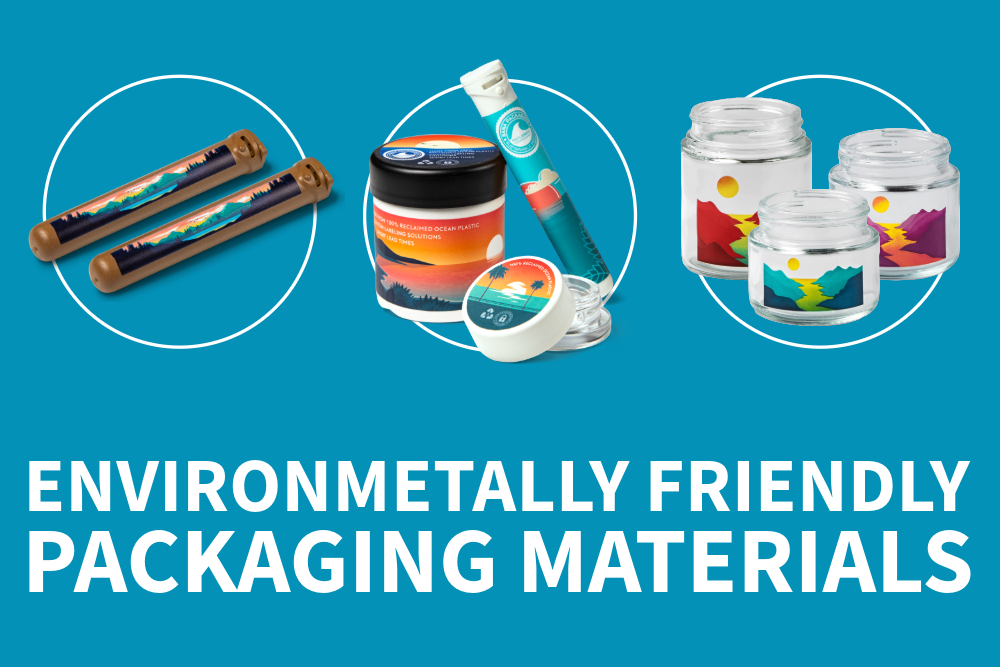
Compare cannabis packaging materials by product compatibility, package performance, sourcing, customization, transportation, and end-of-life considerations.
Choosing a cannabis packaging material is not as simple as identifying the option that sounds most sustainable.
Plant-based, reclaimed, recycled, glass, aluminum, paperboard, and other materials can each support different packaging goals. They also have different limitations, sourcing claims, production requirements, transportation considerations, and end-of-life pathways.
Start with the product and the functions the finished package must provide. Then compare materials within the complete packaging configuration.
No single material is the best choice for every cannabis product, packaging format, supply chain, or local recovery system.
The environmental profile of a package can be affected by:
A light package may reduce transportation weight but use a material that is difficult to recover locally. A highly recyclable material may still have a low recovery rate in the market where the package is sold. A package with recycled content may require a separate closure, liner, label, or tamper-evident component made from another material.
Avoid choosing a package based on a single attribute. Compare the complete system and the conditions in which it will be manufactured, filled, transported, used, and discarded.
Before comparing materials, define what the package needs to do.
Consider:
Material alone does not establish package performance.
A glass container does not independently provide child resistance. Recycled content does not establish food-contact suitability. Aluminum does not automatically provide tamper evidence. A plant-based material is not necessarily compostable. A recyclable package may become difficult to recover when it is combined with incompatible components.
Evaluate the container, closure, liner, seal, label, adhesive, tamper-evident feature, insert, and outer packaging as one configuration.
Sana Packaging’s plant-based hemp plastic is a rigid biocomposite made from approximately 70% plant-derived PLA and 30% micronized hemp hurd, with biobased binders used in the formulation.
The documented molded material is plant-based and petroleum-free. Current formats include pre-roll tubes and a rigid container suitable for compatible product configurations.
Plant-based hemp plastic may be worth evaluating when a project prioritizes:
The material should not be described as pure hemp, plastic-free, or certified compostable. Conventional recycling programs may not accept the finished material, and natural fibers can create variation in color, tone, texture, or surface appearance.
Review the Plant-Based Hemp Plastic FAQ for detailed composition, product, performance, customization, and claim guidance.
Explore Plant-Based Hemp Plastic Packaging.
Post-consumer recycled material has completed its original use, entered a recovery system, and been processed for use in a new product.
Sana Packaging’s current PCR options include rigid polypropylene packages, flexible film containing PCR material, post-consumer waste paperboard, and product-specific ocean-bound plastic packaging.
PCR packaging may be useful when a project prioritizes:
The recycled-content percentage varies by product and component. PCR content does not automatically make a package recyclable, biodegradable, compostable, plastic-free, or environmentally impact-free.
Color, tone, surface appearance, material availability, and production timing can also be affected by recovered feedstock.
Review the Post-Consumer Recycled Materials FAQ for detailed terminology, percentages, products, and claim guidance.
Explore Post-Consumer Recycled Packaging.
Ocean-bound plastic is discarded plastic recovered from areas where it has a greater risk of entering waterways or the ocean because adequate waste-management infrastructure is unavailable.
Sana Packaging’s reclaimed ocean-bound plastic is collected in qualifying communities located within approximately 50 kilometers of a shoreline. The material is generally recovered on land before it reaches a beach, waterway, or marine environment.
Current Ocean Packaging uses product-specific constructions made from reclaimed ocean-bound PET, HDPE, or polypropylene.
This material may be worth considering when a project prioritizes:
Ocean-bound plastic should not be described as plastic pulled from the ocean, marine plastic, ocean waste, or beach plastic. It remains plastic, and its recycling pathway depends on the resin, package format, size, color, attached components, and local collection system.
Review the Ocean-Bound Plastic FAQ for sourcing definitions, resin information, current products, and claim boundaries.
Explore Reclaimed Ocean-Bound Plastic Packaging.
Glass is a rigid, nonporous material used for compatible configurations of flower, concentrates, pre-rolls, edibles, topicals, and other products.
Sana Packaging offers standard glass and high-content recycled-glass formats. Standard glass products typically contain approximately 25% to 30% recycled glass. Current high-content recycled-glass jars contain approximately 50% to 70% recycled glass.
Glass may be appropriate when a project prioritizes:
Glass is generally heavier than comparable plastic or metal packages and can chip, crack, or break. Its transportation and protective-packing requirements should be considered alongside its recycled content and potential recovery.
A recycled-glass claim does not automatically establish that the material is post-consumer recycled glass. The complete package may also contain plastic closures, liners, labels, adhesives, seals, or tamper-evident components.
Review the Glass Packaging FAQ for recycled-content terminology, current formats, closure compatibility, and product-selection guidance.
Metal packaging can include aluminum, steel, tinplate, and other documented constructions. The material should be identified using documentation for the exact package.
Sana Packaging’s current standard metal package is the 114mm Aluminum Pre-Roll Multipack Slider Tin.
Aluminum may be worth evaluating when a project prioritizes:
The current Slider Tin does not have a verified recycled-content percentage and is imported rather than made in the United States. It can also be dented, bent, scratched, or show signs of abrasion during production and transportation.
Aluminum should not automatically be described as recycled, infinitely recyclable, or recyclable everywhere. Coatings, inks, labels, adhesives, inserts, package size, and local collection systems can affect recovery.
Review the Metal Packaging FAQ for current product specifications, material claims, performance considerations, and customization options.
Paperboard and cellulose-based materials can provide secondary packaging, retail presentation, inner layers, inserts, or additional printable space.
Current examples include:
These materials may be useful when a project needs:
Paperboard and cellulose-based components should not automatically be described as recyclable, biodegradable, or compostable.
A certification may apply only to a specific material, ink, coating, or component. For example, the TÜV Home Compostable certification used for Sana Packaging’s current concentrate-jar displays applies to the printing inks, not the complete display.
Secondary paperboard packaging also does not replace the primary package’s product-contact, closure, barrier, child-resistance, or tamper-evident functions.
A finished cannabis package may combine several materials.
A glass jar might use a plastic lid, liner, paper label, adhesive, tamper band, and paperboard display. An aluminum tin might use a plastic insert and an adhesive label. A PCR plastic container might use a liner or closure made from a different material.
Before approving the configuration, document:
Component |
Questions to answer |
|---|---|
Primary container |
What material and recycled or plant-based content are documented? |
Closure |
Does it fit the exact neck finish or package structure? |
Liner or seal |
What product-contact, sealing, or tamper-evident function does it provide? |
Label and adhesive |
Will they remain attached and legible under expected conditions? |
Tamper evidence |
Which component provides visible evidence of opening? |
Child resistance |
Which tested configuration provides child resistance? |
Insert or inner layer |
Is it required for organization, separation, sealing, or product contact? |
Outer packaging |
Does it provide protection, presentation, information, or retail organization? |
End-of-life pathway |
How should each component be separated, collected, or discarded locally? |
Do not assign one component’s material or environmental claim to the entire packaging system.
Test the actual formulation, dimensions, fill weight, headspace, contact time, and storage conditions.
Do not select a package based only on a nominal gram capacity or outside dimension.
Evaluate the complete container, closure, liner, seal, and other functional components.
Confirm child resistance, tamper evidence, resealability, product protection, and filling performance separately.
Identify which claims are supported for the exact package or component.
Examples include:
Do not extend documentation from one product, resin, supplier, or production run to another.
Consider:
A material may support the intended product but still create an avoidable production bottleneck.
Compare:
The package must protect the product throughout the expected supply chain.
Identify the intended pathway for each component and whether that pathway exists in the markets where the product will be sold.
Avoid broad claims such as:
Use appropriately qualified language and provide disposal instructions only when they are supported by current documentation and realistic local infrastructure.
The right cannabis packaging material is the one that meets the product, performance, regulatory, production, presentation, and sourcing requirements of the complete project.
Begin with the product. Define the functions the package must provide. Compare compatible materials and complete configurations. Request current documentation, order samples, and test the package under realistic filling, storage, transportation, retail, and consumer-use conditions.
Material selection should support the entire packaging system, not rely on one appealing claim.
Explore All Cannabis Packaging Products or contact the Sana Packaging team to compare materials, formats, samples, customization options, quantities, and production timing.
Last reviewed: October 13, 2026.
Material composition, product availability, recycled content, certifications, compatibility, pricing, case quantities, minimum order quantities, and production timelines can change. Confirm current product documentation and test the complete configuration before ordering or making packaging claims.
Related resources: Frequently Asked Questions.

Learn how to evaluate metal cannabis packaging by material, product fit, closures, inserts, printing, labeling, recycling, and production...
Our expert team can take care of it. Just click Get Expert Install and we'll send you an email when it's ready!
If everything looks okay to you, you can Ignore this warning.


