
Cannabis Topical Packaging Guide: Jars, Compatibility & Labels
Learn how to evaluate cannabis topical packaging by jar size, material, product compatibility, closures, labeling, and customization. Thi...


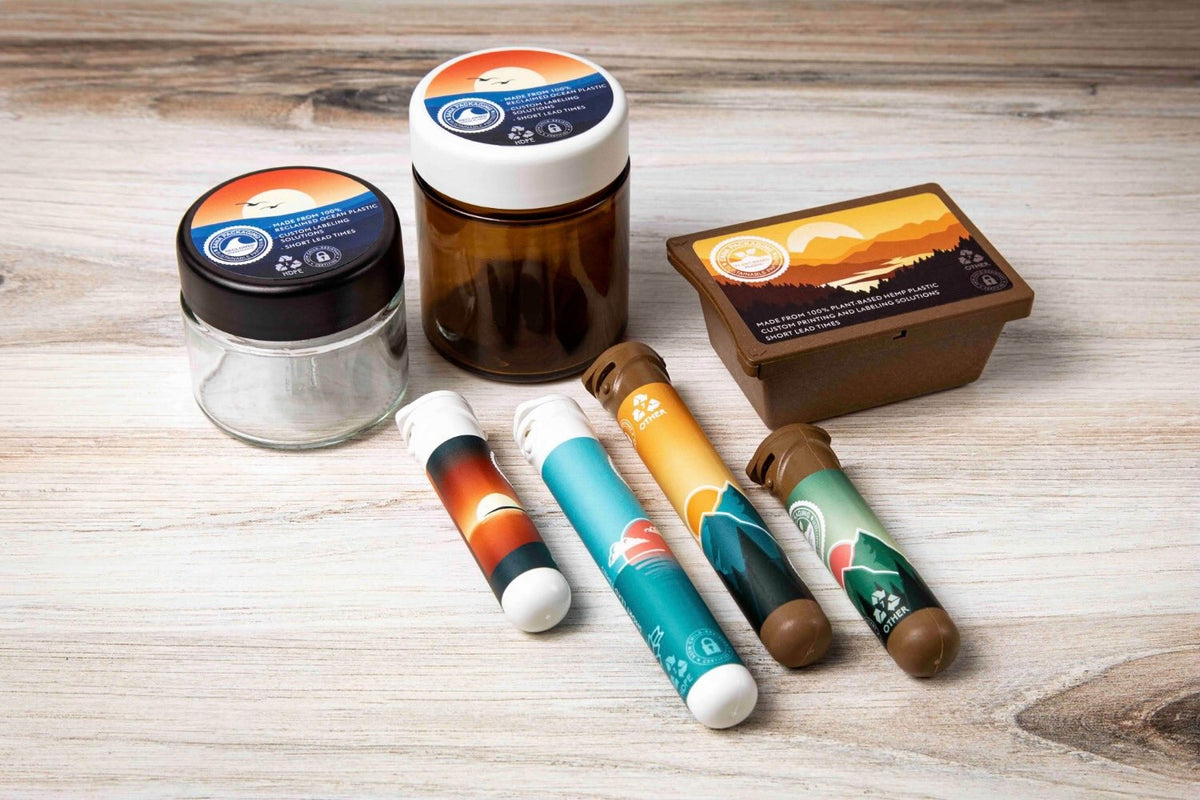
Cannabis packaging design trends can reveal useful opportunities, but they should not determine the package on their own.
Cannabis packaging design trends can reveal useful opportunities, but they should not determine the package on their own.
A clear window, minimalist label, unusual structure, QR code, recycled-content statement, or new closure may look promising. Its value depends on whether it works for the exact product, regulated market, customer, filling process, supply chain, and finished packaging configuration.
The goal is not to predict which color, shape, or material will become popular next. It is to identify durable changes in cannabis packaging and evaluate whether they solve a real problem.
Consumer demographics and purchasing research require a separate analysis. For that framework, see Cannabis Consumer Trends That Shape Packaging Decisions.
Before adopting a packaging trend, ask:
A design choice should advance only when the answers support the complete package.
Cannabis packaging design involves more than the primary container.
The finished configuration may include:
Each component can affect compliance, product protection, customer use, manufacturing, and end-of-life options.
For example, a container may be made from a material with a documented environmental attribute while its closure, liner, label, and tamper-evident component use different materials. A tested closure may perform differently when paired with another container. A label or coating may affect whether a material can be processed by a receiving program.
Health Canada’s current packaging and labelling guide for cannabis products illustrates this system-level approach. When a cannabis product uses multilayer packaging, the applicable requirements extend across the packaging elements rather than stopping with the immediate container.
Define and evaluate the complete configuration before approving its structure, appearance, claims, or disposal instructions.
One of the most important directions in cannabis packaging design is continued work on packages that meet safety requirements while remaining understandable and usable for the intended adult customer.
These objectives are related but not interchangeable.
Cannabis packaging requirements can address:
The rules differ by jurisdiction, cannabis program, product type, serving configuration, and stage of distribution.
California, for example, distinguishes between single-use and multiple-use child-resistant packaging. The required configuration depends on the product and on whether the package must remain child-resistant after opening.
Oregon’s current marijuana packaging and labeling guidance requires qualifying child-resistant packages to be tested and certified by a third-party testing firm. It also explains that changing previously approved packaging can require another approval.
A closure should not be represented as child-resistant merely because it resembles a tested design. Confirm the exact container-and-closure configuration, test documentation, permitted use, and applicable market requirements.
Usability should then be tested separately with the intended adult customer.
Relevant tasks may include whether the customer can:
The U.S. Consumer Product Safety Commission describes special packaging as child-resistant and senior-friendly. Cannabis programs that reference the federal testing framework may still impose their own product-specific rules, documentation, and approval requirements.
Usability research does not replace certification, and certification does not prove that every intended customer will find the package intuitive.
The design task is to meet the applicable safety standard, preserve the supported configuration, clearly communicate the opening method, and minimize unnecessary friction for the adults expected to use the package.
Packaging formats continue to become more specialized because different cannabis products create different protection, handling, and customer-use requirements.
A package should begin with the product, not with a preferred material or appearance.
Relevant factors may include:
Flower, pre-rolls, concentrates, edibles, vapor products, and topicals should not automatically use the same packaging strategy.
For example:
A material described as food-grade or suitable for food contact is not automatically appropriate for every cannabis product or condition of use.
The U.S. Food and Drug Administration evaluates food-contact substances according to factors such as the substance, intended use, food type, and conditions of use. Product-contact documentation should therefore be reviewed for the exact package, product, temperature, duration, and intended market.
Cannabis compliance and product suitability must still be confirmed separately.
Before approving a packaging format, test the complete filled configuration under realistic conditions. Depending on the product, that may involve:
A package should not be represented as preserving freshness, extending shelf life, preventing leaks, or protecting against a particular exposure unless the claim is supported for the exact configuration and use.
Cannabis labels often need to communicate substantial amounts of regulated and practical information within a limited area.
Depending on the product and market, the package may need space for:
These elements should be considered when selecting the package size and label area. They should not be forced into the design after the structure and artwork have already been finalized.
A practical label hierarchy helps customers find the most important information without weakening compliance or brand recognition.
The design should account for:
Information that appears legible on a flat digital proof may become difficult to read after the label is wrapped around a small jar, tube, or bottle.
The final package should be reviewed at actual size and in its assembled form.
Newer label structures can create additional space without unnecessarily increasing the package. Health Canada’s current cannabis packaging and labelling guide, for example, includes requirements for peel-back and accordion panels.
Those formats can help organize information, but they do not eliminate requirements concerning exterior placement, accessibility, language, legibility, or permitted content.
Customization remains an important way for cannabis brands to distinguish products, communicate product differences, and create a consistent identity across packaging formats.
Available methods may include:
The appropriate method depends on the package, order quantity, artwork, production timeline, regulatory requirements, and likelihood that the information will change.
A brand launching a new product may benefit from the flexibility of labels or standardized stock packaging. A mature product with stable demand and artwork may be better suited to a more integrated approach to customization.
Before selecting a method, evaluate:
Customization should make the package easier to recognize and understand.
Visual design can support:
It should not imitate products commonly associated with children, obscure required information, or create confusion about the package’s contents or attributes.
A minimalist design is not automatically clearer. A highly decorative package is not automatically more distinctive. Both approaches should be tested at actual size, on the intended structure, and within the retail setting where the product will appear.
For information about available printing and labeling services, evaluate the exact packaging format, order quantity, artwork, application method, and production schedule before finalizing the design.
Interest in recycled, biobased, reusable, recyclable, and compostable packaging continues to influence product design and regulation.
However, selecting a material with a single documented environmental attribute does not establish that the overall package is environmentally preferable.
A responsible material evaluation may need to consider:
These factors can point in different directions.
A heavier package may provide durability or reuse potential but require more material and transportation energy. A lightweight flexible package may reduce material use and shipping weight but be difficult to collect and process. A technically recyclable package may not be accepted by the program available to the customer.
No single material should be treated as the correct answer for every cannabis product and market.
Policy is also making packaging documentation more important. California’s current packaging extended producer responsibility program, for example, establishes requirements intended to reduce single-use plastic and increase the recyclability or compostability of covered packaging.
The application, deadlines, exemptions, reporting obligations, and material requirements should be confirmed for the exact company, package, and market.
Environmental claims require separate substantiation.
The Federal Trade Commission’s Green Guides address claims such as recycled content, recyclability, compostability, degradability, and general environmental benefit. A claim should identify the exact package or component it covers and include any qualifications needed to prevent a misleading impression.
Avoid assuming that:
For a broader framework, see How Is the Sustainability of Cannabis Packaging Measured?.
For terminology and claim boundaries, see Cannabis Packaging Sustainability Terms Explained.
Material selection should align with the product, performance, compliance, customer use, and disposal requirements of the complete package.
QR codes and other forms of connected packaging can extend the information available beyond the printed label.
Depending on the market and permitted use, a digital destination may provide:
A QR code should solve a defined information problem. It should not be added simply because connected packaging is receiving attention.
Health Canada’s current cannabis packaging and labelling guide permits up to two bar codes, including QR codes, on a cannabis container under specified conditions. The linked content remains subject to cannabis promotion restrictions, and a QR code does not replace information required on the physical label.
Requirements differ by jurisdiction. Confirm whether a QR code is permitted, what it may link to, how it must appear, and which information must remain printed on the package.
Before production, document:
Test the code on the final printed package, not only on a digital proof.
Scannability can be affected by:
A permanent product identifier should not depend on a temporary campaign page or an unmaintained third-party service.
Standards such as GS1 Digital Link can connect standardized product identifiers with online information. Whether that approach is appropriate depends on the brand’s systems, retail requirements, product data, and intended use.
Connected packaging can improve access to supplementary information, but it does not correct an unclear label, unsupported claim, or poorly designed package.
Packaging design affects more than the customer-facing package.
A format that works visually may create problems during procurement, filling, labeling, packing, storage, shipping, or inventory management.
Operational questions should be addressed before the design is finalized.
Depending on the project, evaluate:
A custom structure may create strong differentiation but require a larger inventory commitment, longer lead time, new tooling, or changes to the filling line.
A stock package with labels may offer greater flexibility when a product, regulation, or artwork is likely to change. A more integrated customization method may become practical when demand is stable, and the brand can support the required quantity.
The right choice depends on the project.
Brands should also consider whether unnecessary variation is creating avoidable complexity. Using a common container, closure, or label architecture across several products may simplify procurement and production while still allowing clear product differentiation.
Before placing a full production order, conduct a line trial or controlled pilot with:
Record any failures, adjustments, and approved settings.
A packaging trend creates little value if it causes delays, excess inventory, inconsistent assembly, damaged products, or repeated manual corrections.
Strong product design connects the customer experience with the realities of production and supply.
A packaging trend becomes useful when it produces a documented decision that can be tested and reviewed.
For each proposed design direction, record:
A product-design record should distinguish requirements from preferences.
Child resistance, label information, product compatibility, and supported claims may be requirements. A particular color, finish, shape, or visual style may be a preference unless it serves a documented functional or regulatory purpose.
Keeping those categories separate helps prevent an aesthetic preference from overriding the package’s essential performance.
Individual components should be evaluated, but the final decision should be based on the complete assembled package.
Testing may need to include:
A successful test of an undecorated prototype does not necessarily establish the performance of the printed, labeled, filled, shipped, and repeatedly used package.
Review the package again when there is a change to:
A package that performed correctly in one configuration should not automatically be assumed to perform the same way after a change to a material, component, or production process.
There is no single design trend that applies to every product or market.
The most durable direction is the integration of compliance, product protection, adult usability, clear information, operational fit, and supported material claims. A visual or structural trend is useful only when it improves one or more of those outcomes without weakening another.
Consumer research can identify questions worth testing, but it should not dictate the design on its own.
Use current research to investigate specific preferences, tasks, and communication needs with the intended audience. Confirm compliance, product performance, operations, and cost separately.
Not automatically.
A minimalist design can create a clear hierarchy, but it can also omit useful instructions or make products difficult to distinguish. A more decorative design can attract attention but create clutter or interfere with required information.
Review both approaches at actual size and test whether customers can identify the product, find important information, and use the package correctly.
A single material attribute does not establish the overall environmental performance of a package.
Evaluate the amount of material, product protection, manufacturing, transportation, reuse, collection, processing, disposal, and complete configuration. Describe only the attributes supported by current evidence.
Do not assume that it can.
Rules differ by jurisdiction. Required information may need to remain visible on the physical label even when a QR code provides supplementary content. Confirm what the code may contain, how it must appear, and which information must stay on the package.
Yes.
Printing, labels, inks, coatings, adhesives, tamper-evident components, and other customization can affect fit, performance, legibility, certification, and disposal. Test the production-representative finished package rather than relying only on an undecorated sample.
Consider the product, compliance requirements, demand, order quantity, artwork stability, lead time, budget, inventory capacity, equipment, and need for differentiation.
Stock packaging with labels can provide flexibility. More integrated customization can support a distinctive and consistent presentation when demand and artwork are stable enough to justify the commitment.
Review it whenever the product, package, supplier, process, regulation, intended market, supporting evidence, or customer-use information changes.
Even without a specific change, establish a periodic review schedule for compliance, certifications, product documentation, environmental claims, digital links, and disposal instructions.
Cannabis packaging trends should help brands identify problems worth solving, not encourage change for its own sake.
Begin with the exact product and regulated market. Define the complete packaging system. Protect the contents. Meet the applicable safety and labeling requirements. Make the package understandable for the intended adult customer. Verify material claims. Confirm production and supply-chain fit. Then evaluate how structure, customization, and digital information can improve the result.
A successful cannabis package does more than look current. It continues to work after filling, shipping, retail display, opening, resealing, storage, and disposal.
If you are evaluating a new packaging format or customization project, contact Sana Packaging to discuss the product, configuration, order requirements, and available options.
Last reviewed: August 29, 2026.
Cannabis regulations, packaging requirements, product configurations, certifications, and environmental-marketing standards can change. Confirm current information for the exact product and market. This article provides general packaging and marketing information, not legal or regulatory advice.

Learn how to evaluate cannabis topical packaging by jar size, material, product compatibility, closures, labeling, and customization. Thi...
Our expert team can take care of it. Just click Get Expert Install and we'll send you an email when it's ready!
If everything looks okay to you, you can Ignore this warning.


