
Cannabis Edibles Packaging Guide: Child Resistance, Barriers, Labels & Formats
Learn how to evaluate cannabis edibles packaging by child resistance, barrier performance, food-contact suitability, serving format, labe...


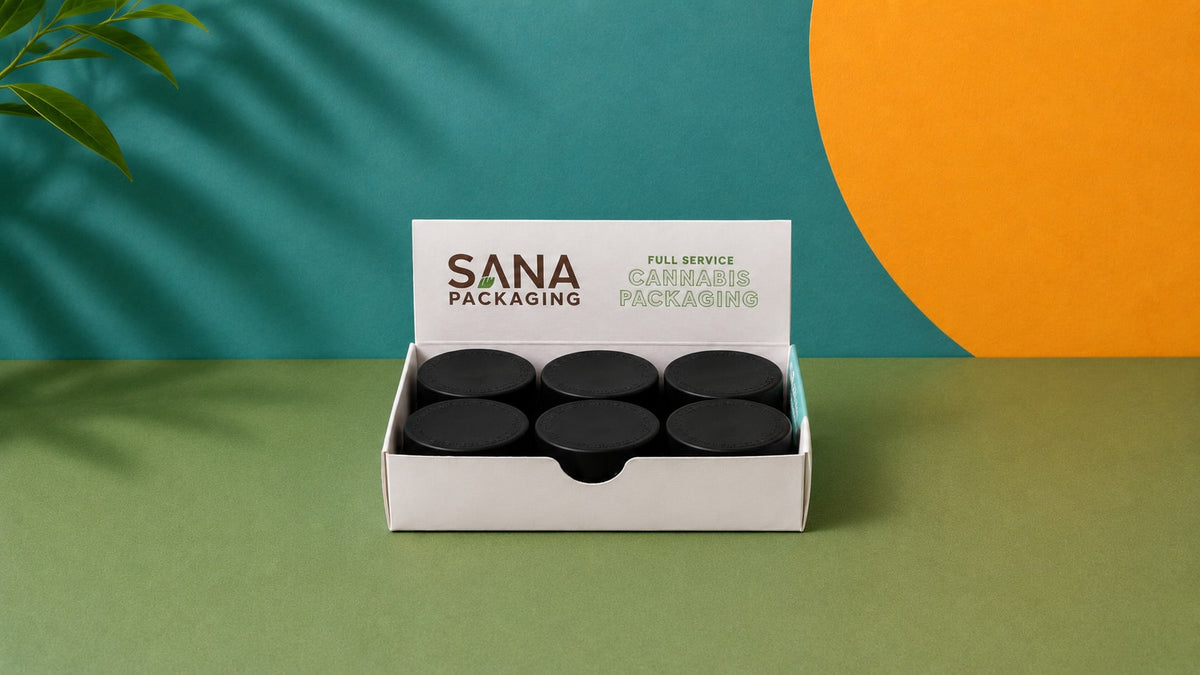
Use a function-first framework to decide when inserts, tamper bands, inner baggies, paperboard displays, or cones add measurable value to a cannabis packaging configuration.
A cannabis packaging add-on should earn its place in the finished configuration.
An insert, tamper band, inner baggie, paperboard display, or pre-rolled cone can solve a specific packaging, presentation, or production problem. It can also add material, cost, inventory, assembly labor, inspection steps, and another component that must be reordered correctly.
Start with the function the package needs. Then decide whether an additional component is the simplest reliable way to provide it.
Before selecting an add-on, identify the exact problem or goal.
An add-on may be used to:
These functions are different. One component should not be assumed to provide all of them.
A pre-roll insert does not independently provide child resistance. A tamper band does not make a package child-resistant. A paperboard display does not replace the primary package’s closure, barrier, or product-contact functions.
Define each required function and identify the component responsible for providing it.
An insert may be useful when products move, rotate, strike one another, or appear disorganized inside a multipack.
The decision should be based on the finished product, not only its nominal length or fill weight.
The Pre-Roll Multipack Paper Insert is designed specifically for the 90mm Ocean Pre-Roll Multipack.
The black, adhesive-backed insert can organize up to five compatible finished pre-rolls approximately 85 millimeters or shorter. It is packed 500 inserts per case and is sold separately from the multipack.
Evaluate the insert when the package needs:
Do not assume that every pre-roll described as 84 or 85 millimeters will fit. Filling, tamping, folding, twisting, and closing can change the finished length and widest diameter.
Test production-representative pre-rolls inside the assembled multipack before ordering production quantities.
The Pre-Roll Multipack Plastic Insert is designed specifically for Sana Packaging’s 114mm Aluminum Pre-Roll Multipack Slider Tin.
The insert is available in black or white and can hold up to five compatible 109mm pre-rolls, each weighing approximately 1 gram. It is packed 200 inserts per case and is sold separately from the tin.
The plastic insert may be appropriate when individual slots improve movement control, product separation, or shelf presentation.
Its exact resin and recycled-content percentage are not currently documented. Do not assign unsupported material, recycled-content, or recyclability claims to the insert.
An insert may not be necessary when:
Compare the package with and without the insert. Use the configuration that meets the actual product, transportation, consumer-use, and presentation requirements without unnecessary material or complexity.
For a broader comparison of pre-roll tubes, multipacks, cones, and equipment, review the Cannabis Pre-Roll Packaging Solutions guide.
Child resistance and tamper evidence serve different functions.
Child-resistant packaging is designed to limit a young child’s ability to access the contents. Tamper-evident packaging provides visible evidence that a package may have been opened or altered.
One function does not automatically establish the other.
The Customizable Stone Paper Tamper Bands measure 0.25 by 2 inches. They are perforated, water-resistant, and packed 4,000 bands per roll. Stock bands are blank, while custom printing is available for qualifying projects.
Custom production generally requires approximately 3 to 10 business days after proof approval.
The bands are made from approximately:
The polyethylene content means the bands should not be described as plastic-free or recyclable with paper.
A Stone Paper band can provide visible evidence of opening when it is applied correctly to a compatible package. It does not provide child resistance on its own.
Before using a band, confirm that it:
Review How to Evaluate Child-Resistant Cannabis Packaging before assigning child resistance or tamper evidence to any component.
An inner baggie may provide a separate product-contact or sealing layer inside another container.
Sana Packaging’s Compostable Film Baggies are made from cellulose film. Each baggie measures approximately 2.5 by 1.25 by 5.25 inches and is commonly evaluated for up to approximately 3.5 grams of product.
The baggies are:
A stated weight is a planning reference, not a guarantee of fit. Product density, dimensions, headspace, sealing requirements, and the intended outer package can affect usable capacity.
Food-contact suitability must also be evaluated for the exact product and conditions of use. Confirm the finished formula, contact time, filling conditions, storage environment, and sealing process.
FSC and PEFC documentation relates to responsible fiber sourcing. It should not be presented as proof of compostability or as a substitute for current compostability documentation and appropriately qualified disposal instructions.
Use an inner baggie only when it provides a defined product-contact, sealing, separation, or handling function that the outer package does not provide on its own.
A paperboard display can organize finished packages and provide additional space for branding or retail information.
Sana Packaging’s Custom 9ml Concentrate Jar Paperboard Displays are designed for filled 9ml concentrate jars.
Available formats include:
The displays are made from 18-point paperboard. Material options include:
One-sided full-color printing is included.
The minimum order quantity is 250 displays per combination of format, material, and design. Standard production time is approximately 10 to 14 business days after proof approval.
The TÜV Home Compostable certification applies to the printing inks. It does not apply to the complete paperboard display.
The jars and lids are sold separately from the displays.
A paperboard display is secondary packaging. It can organize and present finished jars, but it does not replace the primary package’s:
Select the jar, lid, liner, labels, and tamper-evident components before approving display artwork. Test the fully assembled jars in the intended display to ensure labels or bands do not interfere with the jar cutouts or the finished presentation.
The Custom Cannabis Concentrate Packaging guide provides a complete example for a 9ml jar, lid, tamper-band, labeling, display, pricing, and scheduling.
Not every item in an Add-Ons assortment is a secondary packaging component.
Pre-rolled cones are production inputs that become part of the finished product. Their dimensions and performance can affect filling, closing, inspection, and retail-package selection.
Sana Packaging offers formats including:
Select the cone with the flower, keeping in mind the target fill weight, filling equipment, closing method, and retail package.
A nominal cone length does not establish the final dimensions of the finished pre-roll. Test actual production samples before confirming a tube, multipack, or insert.
Before approving an additional component, answer seven questions.
Add-ons use different ordering units and production schedules.
| Add-on | Current ordering consideration |
|---|---|
| Paper pre-roll insert | 500 inserts per case |
| Plastic pre-roll insert | 200 inserts per case |
| Stone Paper tamper bands | 4,000 bands per roll; custom production generally 3 to 10 business days after proof |
| Compostable Film Baggies | 1,000 baggies per case |
| 9ml paperboard displays | Minimum 250 per format, material, and design; generally 10 to 14 business days after proof |
Confirm current availability, pricing, and lead times before ordering. Customized components may ship separately from stock packaging.
Build the production schedule around the slowest required component, not the fastest stock item.
A finished configuration may combine paper, plastic, cellulose film, calcium carbonate, polyethylene, paperboard, glass, aluminum, labels, inks, and adhesives.
Do not assign one material claim to the entire package.
For example:
Use appropriately qualified language and confirm local collection, recycling, and composting conditions before making disposal claims.
The right add-on is the component that solves a defined problem without introducing unnecessary material, cost, or complexity.
Start with the finished product and primary package. Identify any remaining protection, organization, tamper-evidence, sealing, presentation, branding, or production requirement. Then compare compatible add-ons, order samples, and test the intended configuration under realistic production, storage, transportation, and consumer-use conditions.
Explore Sana Packaging’s Add-Ons or contact the Sana Packaging team to discuss product fit, samples, quantities, customization, and production timing.
Last reviewed: August 27, 2026.
This guide is for general informational purposes and does not constitute legal advice. Cannabis packaging and labeling requirements vary by product, package configuration, and jurisdiction. Verify current requirements, product documentation, compatibility, pricing, availability, and production timelines before ordering or implementation.
Related resources: Add-Ons FAQ.

Learn how to evaluate cannabis edibles packaging by child resistance, barrier performance, food-contact suitability, serving format, labe...
Our expert team can take care of it. Just click Get Expert Install and we'll send you an email when it's ready!
If everything looks okay to you, you can Ignore this warning.


